Have you ever looked at something and thought ‘is that exactly what it’s claimed to be?’
I think this quite often with food and drink products. Unless you’ve grown, made and packaged it yourself, how do you fully know what it is?
Well, you don’t fully.
For far flung items with lengthy supply chains you’re relying on the business to be transparent, honest and to back up their claims using primary evidence.
There’s an element of trust to be had, which is why the bamboo toilet paper news has created a real stir. Or the ‘very little bamboo’ bamboo toilet paper to be more accurate.
And it’s hit even harder for green consumers as it involves reputable, genuine brands with good sustainability track records and sentiment. Have you been being unknowingly misled the whole time?
What’s happened?
Here’s the quick read from my Instagram or you can reading below for the full story.
The news all comes off the back of a Which? investigation into bamboo toilet roll. Apparently the consumer watchdog received a ‘tip off from an industry insider alerting us to concerns that some toilet roll wasn’t made from what was claimed’. Cue the alarm bells.
So in November 2023, Which? contracted an independent lab to test five bamboo toilet papers – Bazoo, Bumboo, Cheeky Panda, Naked Sprout and Who Gives A Crap (WGAC).
The fibre composition of each was tested using an industry standard known as TAPPI T 401. This test breaks down the fibre material into its constituent components so they can be identified.
The results were quite shocking:
| Brand | Bamboo Fibres Found In Toilet Paper |
|---|---|
| Who Gives A Crap | 100% |
| The Cheeky Panda | 100% |
| Bazoo | 26.1% |
| Naked Sprout | 4% |
| Bumboo | 2.7% |
The testing showed very low levels of bamboo in the three bamboo toilet rolls from Bumboo, Naked Sprout and Bazoo. With the exception of Naked Sprout, all said there toilet paper contained 100% bamboo.
Instead of the expected bamboo fibres, these toilet rolls were primarily made from virgin hardwoods, such as eucalyptus and acacia. Eucalyptus is a fast-growing tree, often sourced from plantations in Brazil and South America (and away from its native Australia). Acacia is also grown in plantations and is associated with deforestation in biodiverse areas like Indonesia. This isn’t good.
For how long this has been going on for we don’t know.
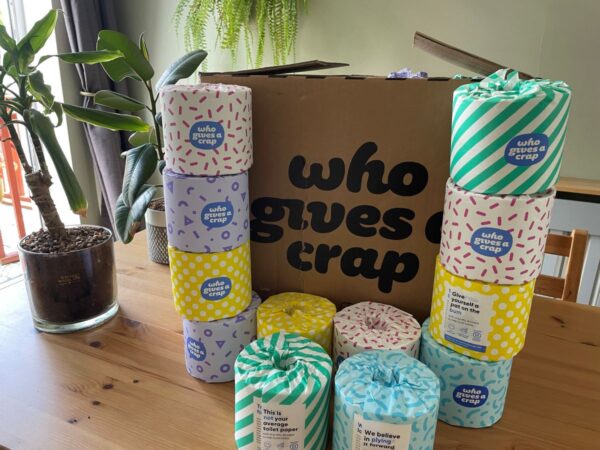
What have the brands said?
As you can imagine, I bet Who Gives A Crap and The Cheeky Panda were delighted, after potentially letting out a huge sigh of relief.
So, what have the other brands said?
Naked Sprout
Naked Sprout took a lot of the immediate flak due to their large size.
It’s fair to say that Naked Sprout disputes the objectivity of the test and the validity of the results. They’ve come out against the industry standard test and, in effect, said that Which? got it wrong.
They released a full and frank response that you can read here. It’s a long response, but here’s the summary of what they said:

- Naked Sprout bamboo product is made from bamboo only. Our supply chain verification proves this.
- The NS entire supply chain is FSC certified. We have had confirmation from the FSC that there have been no issues identified with any of our pulp suppliers.
- NS don’t use the TAPPI T 401 test, because it’s not suited to our unbleached bamboo products.
- Which? have refused to share a copy of the test results with us. Meaning we are unable to interrogate the results and how they came to their conclusion.
Co-founder of Naked Sprout, Leila Coleman, said in a Linkedin post:
“There’s no perfect way right now of testing unbleached bamboo toilet paper. We’ve been looking for a test that’s accurate, reliable and implementable within our supply chain for a long time. The problem is, unbleached bamboo can show very similar properties to softwood and hardwood.”
“We are moving to a policy of radical transparency. So every one of our customers can see our Forest Stewardship Council (FSCC007915) independently verified, full supply chain data.
“This means that you’ll be able to see exactly where our bamboo is grown, exactly how it comes to our factory, and exactly what goes into our products to produce your toilet paper. This will make us the first toilet roll brand to do so. Over the next few weeks we will make our supply chain data easy to access and easy to understand.”
You can read my previous Naked Sprout review here.
Bumboo
Having spoken to the team at Bumboo previously, I exchanged a number of emails with them where they shared their thoughts.
In essence, Bumboo have held their hands up, taken responsibility, found the problem and put actions in place to make sure this doesn’t happen again. I genuinely commend them for this transparent and quick response.

They said, “This is something that happened a few months ago now, and we told our customers straight away. While only a small number of products were impacted, we take any deviation from our 100% bamboo standard very seriously.
“We previously fibre tested our products annually, however now test every single batch of products and put their lab results online for all to see. We’ve discussed our learnings in our 2023 Impact report.”
I also exchanged a couple of messages with Bumboo CEO Rob Ingram. In his Linkedin post, Rob said:
“In an era where consumers demand authenticity, we faced a significant challenge when we discovered a deviation from our 100% bamboo standard in a small number of our products. This moment was a true test of our values as a team.
“We responded by embracing full transparency and sharing our findings openly with our customers. We immediately addressed the issue and seized the opportunity to improve our processes. Implementing stringent third-party testing for every batch and publishing these results on our website has since become our standard, reaffirming our unwavering commitment to quality products.”
Bumboo have also posted a timeline of events on their website for full transparency.
You can read my previous Bumboo toilet paper review here.
Bazoo
Since the news hit, Bazoo have kept the lowest profile out of all three brands. I’ve previously spoken to founder Sanmarie Grobler, so I sent an email to get her thoughts.
She was very open and transparent about what went wrong, stating that it “should never have happened”.
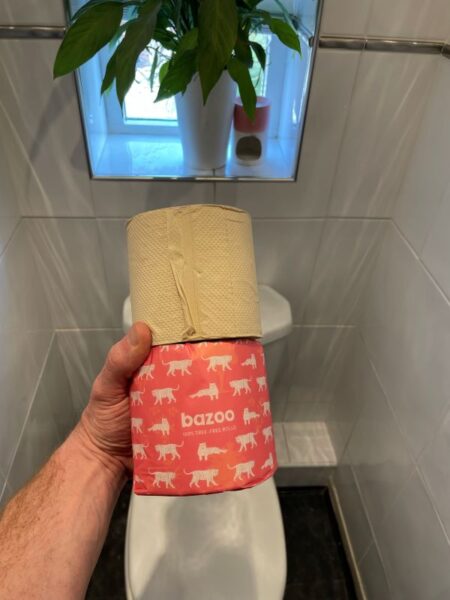
Bazoo believed they were doing everything possible to make sure their toilet roll was 100% bamboo, including paying for auditing and the checking of fibre content with the likes of FSC and their certifying bodies SCS and AIS.
They’ve also published a short response to the Which? article, the majority of which you can read below:
“We have recently been made aware that a batch of our bamboo pulp was contaminated with wood, and consequently impacted a small number of our rolls.
“Bazoo and our entire supply chain is vigorously audited by the Forest Stewardship Council (FSC), the leading supply chain certifier in our market, so we were incredibly disappointed to know that any of our rolls had been contaminated at source. We are in extensive communications with FSC to understand clearly where this error occurred.
“We truly are committed to delivering on our promise of 100% bamboo rolls and have taken every step in our power to understand the root of the problem and ensure we’re fully protected from any future contamination. This means stricter quality control measures, more frequent testing, and doing right by our customers that have received contaminated products.
Any customers affected by the contaminated batch have been contacted. As a UK start-up trying to make a difference we knew there would be bumps along the way, but we truly value your support and together hope we can make just a bit of difference to the future of our rainforests.”
You can read my previous Bazoo toilet paper review here. You can also read a little more on the lively debate that took place on my Linkedin post below.
Where did it all go wrong?
Somewhere along the way, wood fibres have found their way into the toilet roll pulp that should only contain bamboo.
To me, this seems like a supply chain issue. And a major one at that.
The suppliers who gather the resources and create the products have either knowingly or unknowingly misled these bamboo toilet roll brands. At some point in the chain, this has knowingly occurred.
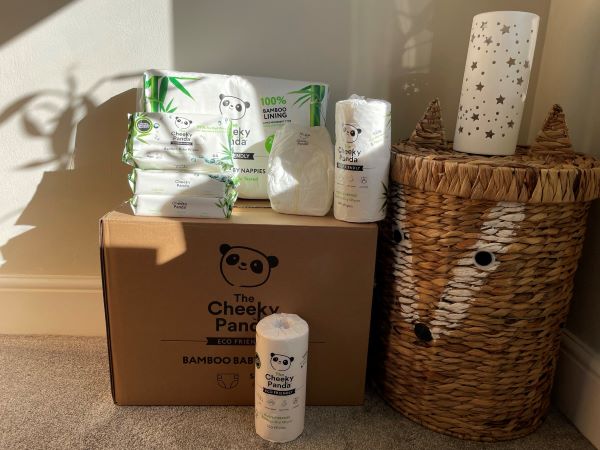
The products from Bumboo and Bazoo are manufactured in China. All of this key business action is a long way from the UK. To ensure all is above board, the companies need to have boots on the ground. Chris Forbes from The Cheeky Panda, who came back as 100% bamboo, says their company has five people based in China.
For the smaller businesses who can’t always necessarily go to the lengths of bigger businesses, they’re putting their trust in certifying bodies, such as FSC, who are paid to supply a good service.
I don’t think the FSC is a perfect organisation. They certainly have their problems, scandals and potential greenwashing issues. You can read more here. If it’s the fault of the FSC who aren’t doing their job properly, then this is very disappointing.
It’s clear that it’s the checks where things have fallen down. Checks are usually performed on an annual basis, both on the suppliers and the companies themselves in the UK. Being honest, one check a year isn’t a lot. I think this is what most of the brands will be changing to make sure every batch is pure bamboo every time.
Where can it all go right?
It’s a shame this has occurred as all three brands genuinely take sustainability seriously. I don’t think any of them have done this in a deliberate attempt to greenwash. Being a more eco friendly toilet paper choice is central to all of the bamboo brands, which is also why it has stung the industry and consumers so much.
As most of the brands here have said, they’ll use this episode to enact immediate changes that will be positive in the long run.
I think bamboo can still have a place as a sustainable material for toilet roll. It has plenty of benefits and is certainly a better choice than virgin paper sourced from deforested trees, which is still used by the major brands. For example, Andrex toilet tissue uses 77% farmed eucalyptus with the rest coming from tree fibres, such as softwood pulp from Europe and North America.
The WWF, Natural Resources Defense Council (NRDC), Ethical Consumer and everyone else who cares about sustainability, agrees that virgin timber doesn’t need to be used to create toilet paper.
But what I also think is that locally sourced recycled paper is the most sustainable choice for toilet rolls. This is backed by the WWF and NRDC.
Two of my favourite recycled paper toilet roll brands here in the UK are Serious Tissues and Honest Tissues.
The Environmental Paper Network says recycled tissue fibre has around a third of the greenhouse gas emissions compared to virgin fibre and just half of the water use, as well as not requiring any new resources.

Final remarks
Do I think these brands have deliberately been greenwashing?
No, I don’t. I think they’ve been largely let down by their supply chain and the likes of FSC who they’ve paid and put their trust into.
Are the brands still responsible for the mistakes? Yes, they are. Some say they’ve been negligent towards their sustainability credentials. Maybe a little slack I’d say. Brands thought the right checks were being made but in the end, it’s their name on the box and the supply chain is still their responsibility.
Has consumer confidence been rocked? Yes, confidence and trust has been impacted. This could have repercussions across the wider industry, which is going to have to work harder and prove themselves to the wider audience on the eco front.
Well done though to Who Gives A Crap and The Cheeky Panda who have robust systems in place for verifying their pulp.
Can the brands come back from this? Yes, I definitely think they can.