Top Takeaways
>> Most modern light bulbs, such as LED bulbs, can be recycled. Older incandescent light bulbs can’t be recycled and must go into the general waste.
>> LED light bulbs are classed as electronic waste. They can’t be recycled from your curbside recycling collection.
>> To recycle LED bulbs, they need to be taken to a specialist collection point, which can be found at most supermarkets and recycling centres.
What do you usually do with your bulbs once they go out? Chuck them in the general waste bin?
Yep, I’ve been there too. It’s the easy option of course, but have you ever thought how you should really dispose of light bulbs? How about recycling light bulbs?
According to a 2019 report, a whopping 72% of the world’s electronic waste (also known as e-waste) doesn’t get recycled and ends up in the landfill instead.
E-waste includes computers, electronic appliances, TVs, smartphones, and in some cases, even our light bulbs.
This type of electronic waste is the fastest-growing waste stream when it comes to both commercial and domestic waste. Over 23kg of e-waste is produced per person in the UK alone. Without doubt, e-waste is going to become the new ‘plastic’ in terms of environmental problems unless it’s recycled properly.
Let’s take a closer look at recycling lightbulbs.
Are light bulbs recyclable?
Let’s get straight to the main question: can you recycle light bulbs?
Yes light bulb recycling is possible. But only certain types of bulbs can be recycled.
Light bulbs that are classified as e-waste can be recycled by specialised facilities.
However, incandescent light bulbs and the now-banned halogen light bulbs can’t be recycled in any way.
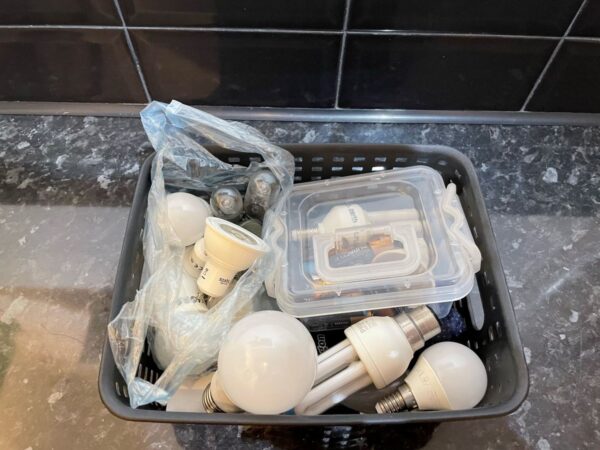
What are light bulbs made of?
To understand the difference when it comes to recycling light bulbs, we need to know what they’re made from.
The basic structure of a traditional light bulb consists of two metal contacts that connect to the electrical circuit, two wires, a very thin metal filament (usually tungsten which is hard to melt) and a glass enclosure, which is filled with inert gas to stop the filament from disintegrating.
There are three main types of light bulbs:
1. Incandescent light bulbs
The structure outlined above is the exact structure found in incandescent light bulbs. We often think of these as ‘traditional’ light bulbs.
As the name indicates, they work by incandescence.
This is where light is emitted as the tungsten filament heats up through electricity, while the inert gas stored in the chamber, or the vacuum, keeps the filament from evaporating.
2. LED light bulbs
LED light bulbs use microchip technology and small ‘light emitting diodes’, instead of a filament.
They use a combination of aluminium-gallium-arsenide as a conductor and are usually considered a more eco-friendly option.
This is chiefly because they require 75% less energy to work than incandescent light bulbs. However, recycling LED light bulbs is still a challenge.
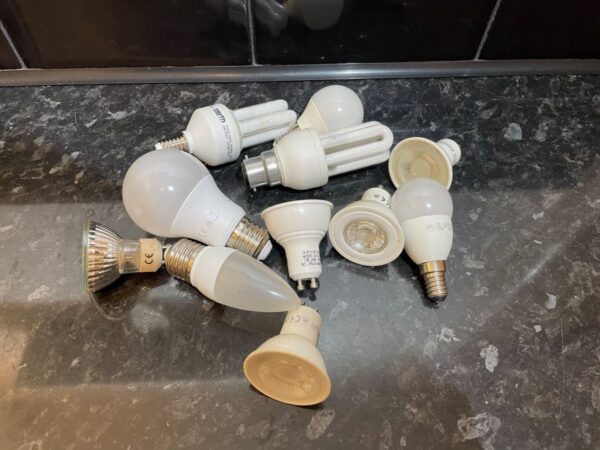
3. Compact fluorescent light bulbs
Finally, compact fluorescent light bulbs (CFLs) are made of glass, ceramic and metal, relying on small amounts of mercury, phosphor and gas tubes to produce light.
They also require around 70% to 80% less energy and last much longer than incandescent light bulbs, making for a more environmentally friendly option — at least when it comes to energy-saving!
why is recycling light bulbs so challenging?
Disposing of light bulbs properly can be quite challenging as there is a lot of misinformation and confusion around what type of waste they classify as.
LED bulbs and fluorescent light bulbs are generally considered as e-waste.
They can only be disposed of safely by being sent to a specialised electronic waste collection facilities.
This is because both contain materials that are harmful to the environment – namely mercury, phosphor and lead – mixed in with other materials.
Incandescent light bulbs, on the other hand, don’t contain toxic or harmful substances. But they definitely come with their own environmental drawbacks.
Traditional light bulbs consume around 80% more energy compared to their LED and fluorescent counterparts. This is one of the main reasons why they’re slowly being phased out in the UK and EU.
The glass chamber of an incandescent light bulb is also not fit for curbside glass recycling, as separating the glass from the many wires and conductors is quite challenging.
It’s really no wonder why so many households end up disposing of their light bulbs in their general waste bin – light bulb recycling is difficult.
So, what’s the best way to recycle light bulbs in the UK?
How to recycle light bulbs UK?
Here’s how to recycle light bulbs according to what type of product you’re dealing with. We’ll also take a look at where to recycle light bulbs to give you the main options out there.
fluorescent light bulbs
As electrical goods, fluorescent light bulbs should not be disposed of in your rubbish bin. Any breakages of these bulbs can cause mercury and phosphor to leak out which can cause harm to both our waterways and waste collection workers.
So, where you can recycle these light bulbs?
Not all councils will accept CFLs for curbside pick-up. In many cases, you’ll have to bring your expired light bulb to your local recycling facility.
But what happens if you have a broken light bulb on your hands?
The best course of action will be to collect all the pieces in the safest manner, put them in a sealed container and take them to a recycling point.
LED light bulbs
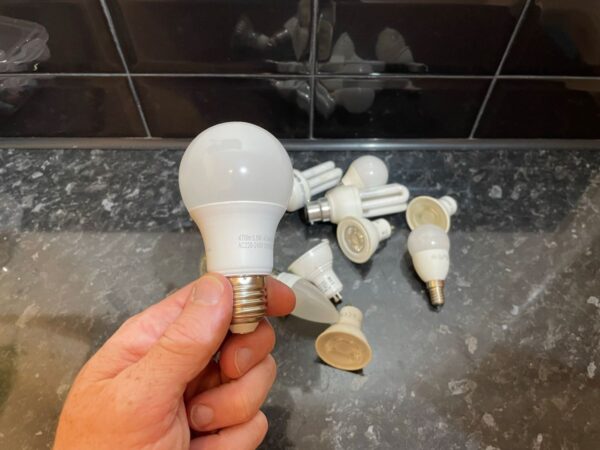
Many households do dispose of their LED light bulbs by throwing them in the rubbish bin, as they are not technically considered hazardous materials.While not as toxic as fluorescent light bulbs and considered much safer to handle, you should also avoid throwing your LEDs in the rubbish bin.
The majority of LED components (specifically glass and metals) can be recycled.
As they are generally classed as e-waste, I’ve found the best way to deal with LED lightbulbs is to collect them altogether over a period of time, then take them all at once to a recycling point.
You can find light bulk recycling points in supermarkets or at your local recycling centre.
Halogen light bulbs
Halogen light bulbs can’t be recycled because of the nature of their structure.
The filaments and fine wires are difficult to separate out from the glass to recycle properly.
So, how do you dispose of halogen light bulbs?
Unfortunately, the best way is to put halogen bulbs into your general waste bin. They don’t contain any toxic chemicals or the heavy metal mercury.
It’s a good idea to wrap them in some other kind of waste you’re getting rid of to avoid the glass breaking and potentially harming someone who may come into contact with your rubbish.
Where to recycle light bulbs?
To recycle the more eco-friendly LED light bulbs, you can head over to your local e-waste recycling centre or even selected electronics stores like Curry’s PC World.
Keep in mind that depending on your location, you might have to plan ahead to find a suitable recycling facility, so make sure to do your research beforehand on websites like Recycle Now.
What is the most eco-friendly light bulb for your home?
But just because you can recycle light bulbs, or at least most of them, doesn’t mean that they make for a sustainable choice.
Incandescent light bulbs are slowly being phased out in favour of LEDs, as they cannot be recycled, consume large amounts of energy, and tend to not last nearly as long as fluorescent and LED light bulbs.
Even CFLs are next on the list of light bulbs to be banned in the UK, following toxicology concerns.
LEDs will soon become the default in all households as we move towards a more energy-efficient and sustainable future, so we can only hope that recycling options will become more accessible over time!
I hope that’s helped you out on your light bulb recycling.
Related reads