
Have you ever thought about ethical investing? Does it actually exist? And does it make you any money?
Yes and yes are the answers.
Ethical investing is quickly becoming more and more popular, particularly with first time investors and the younger generation.
Since edging its way into the investment world during the 70s and 80s with socially responsible investing, ethical investing has gained prominence and evolved over time. This evolution has created a number of niches and similar terms that all sit under the ethical investing umbrella. You’ve got ESG, SRI, sustainable, green and impact investing to name just a few.
For novice investors like me, this can be a little confusing, if not overbearing – what’s the best ethical investment type to put my money into? What’s going to have the biggest positive impact on my finances, on the environment and society?
Fear not and let me clear everything up for you as quickly as possible. By the time you reach the end of this blog, I hope you’ll be confidently on your way in the ethical investing world. If not, let me know!
And just to note as a disclaimer, I am not a financial expert, so please don’t read this blog as bona fide finacial advice. Always do your own research before investing.
What is ethical investing?
Ethical investing is a broad term that arches over several similar, but distinct, types of investments. We’ll get on to these shortly.
It’s not a contradiction in terms. Ethical investing does exist and it could play an important and powerful role in creating a more sustainable future. Here’s why.
Ethical investing has a dual purpose:
- To make a financial return
- To do good in the world (or at least avoid the bad)
If more funds made their way into ethical companies, we’d see more development and more innovation of ideas that can be used to unpick and replace the harmful practices that currently exist.
Ethical investing isn’t a regulated term. This is why it’s used fairly loosely to describe investment types that have a sustainable and responsible aspect to them. It also comes down a little bit to investor opinion and individual principles, although I think we can all agree that businesses involved in, for example weapons trading, isn’t the most ethical.
The primary aim of ethical investing is to invest money wisely with a future return in mind, but through a socially responsible filter.
This makes ethical investing clearly distinct from traditional investing, which seeks to maximise financial returns regardless of the environmental or social factors.
This doesn’t mean that all traditional investing is bad. It’s just that traditional investing may be funding activities and businesses that don’t sit right with the more ethical and socially conscious investors.
Clampdown on Greenwashing
Until 2024, any fund could call itself ‘sustainable’ or ‘environmental’ whilst investing in unethical and unsustainable activities with no repercussions. There was no regulations stopping this.
However, the UK now has the Sustainability Disclosure and Labelling Regime (SDR) which has come in via the Financial Conduct Authority (FCA). Their ‘anti-greenwashing rule’ means companies have to make sure their sustainability references are fair, clear and not misleading.
Now, companies need to go by an evidence-based approach to use certain terms like ‘sustainable’ or ‘impact’. There are four official labels for investment products with sustainability objectives:
- Sustainability Focus: Funds which invest in environmentally and/or socially sustainable assets
- Sustainability Improvers: Funds which invest in assets that have potential to improve sustainability over time
- Sustainability Impact: Funds which aim to achieve predefined positive measurable impact
- Sustainability Mixed Goals: Funds which use a blend of the above approaches
Difference between investing and savings accounts
Investing and saving can often be used to mean the same thing. However, there is a big difference.
Investing is where your money is used directly to buy stocks, shares and bonds (loans made to governments or businesses) in other companies and organisations. There are no set returns here and performance depends on the performance of the stocks and shares, which can go up or down.
Savings is where your money is put into an account in return for a set interest rate over time. These are typically used if you have a savings goal, e.g. to save for a house deposit, buy a new kitchen or save for a holiday.
With a personal savings account with a set interest rate, your money is not at risk from the variations in the stock market. When you invest, your money is at risk. That being said, the financial savings provider will be using your money to make investments, just without you knowing it. You can take a look at the most ethical savings accounts here.
Ethical Investing Market Growth
The ethical investing world has exploded in recent years. Research from the Morningstar shows that by the end of 2024, sustainable funds globally were worth a massive $3.2 trillion. To put that in perspective, that’s grown by 8% in just one year, and when you compare it to 2018, the market has expanded by over 400%.
What’s interesting is that Europe is absolutely leading the charge here. European funds make up a huge 84% of all sustainable investing assets worldwide in 2024. This shows that European investors have really embraced the idea of putting their money where their values are.
For me, this growth makes complete sense. More and more people are waking up to the fact that they can make decent financial returns whilst supporting companies that are actually doing good in the world. It’s not surprising that people want their investments to reflect their personal values – why wouldn’t you want your money working for causes you believe in?
Main types of ethical investing
There are a few different types of ethical investing.
Confusingly, they can be known by different names – Ethical, Responsible, Sustainable, Green, Eco, ESG and Impact.
Although these investment types target broadly the same businesses, there are some important nuances to be aware of. Let me explain.
All investments aim to make a financial return (point 1 above), so this can be taken as a given.
Many of the differences between the types of ethical investing come in the ‘doing good’ part, the second purpose of ethical investing.
Some of the main ethical investment types are:
- Socially Responsible Investing
- ESG Investing, sometimes known as Sustainable Investing
- Eco or Green Investing
- Impact Investing
Here’s a quick run down on each.
– Socially Responsible Investing
The desire to invest responsibly first came about in the US in the 1970s with Socially Responsible Investing (SRI).
SRI allowed certain investors of a moral persuasion to bypass particular industries – guns, gambling, tobacco and others – which they didn’t deem as socially responsibly.
SRI operates with a filter out the bad and invest in the rest policy.
– ESG Investing or sustainable Investing
ESG investing seeks to maximise financial returns whilst taking three key areas of the investment process into account – Environmental, Social and Governance – handily known as ESG.
ESG investing starts off in a similar way to Socially Responsible Investing by removing some of the ‘bad’ industries – weapons, tobacco etc.
The process then differs by actively looking at the ESG factors for each company. These cover:
- Environmental issues – carbon footprint, resource use, pollution, waste management, energy use
- Social considerations – gender equality and diversity, conditions for workers, human rights and community relations
- Governance – how the company is run. Key questions here include, who makes up the board? Are there anti-corruption policies in place? Are there any political links? What do the executive compensation packages look like?
Funnily enough, it was the Church of England who helped bring ESG investing into the mainstream during the 1990s. The Church wanted to make sure their investments weren’t going into what they thought of as bad or unethical businesses that didn’t align with their own values.
It’s not to say they are the best, but the companies who pass the threshold and meet ESG requirements are generally good corporate citizens, which makes ESG investing a great way to invest ethically.
– Eco or Green Investing
‘Green’ is often used as a catch-all term for anything that is environmentally friendly.
In the investment world, green or eco investing is a more focussed form of ethical investing, which picks out projects and businesses that want to solve an environmental problem through a product or practice.
The companies involved in greener solutions for the environment are often technology-led and aim to replace existing products and practices, for example electric cars aiming to replace petrol cars.
Green investing tends to support companies involved in reducing pollution, lowering carbon, improving waste management and creating cleaner renewable energy alternatives.
Eco investing has gained popularity since the 1990s when the world’s environmental problems really started to hit the mainstream.
– Impact Investing
Impact investing is one of the newest forms of ethical investing and has a clear distinction to the other forms discussed above.
Impact investing is the financial backing of a company whose outright aim is to have a positive impact on the environment or society, as well as creating a financial return over the long term.
Rather than investors just screening out the companies that have a negative impact on the environment or society, impact investors pro-actively seek and invest in businesses that plan to have a significantly positive impact on the world. They place a large emphasis on measuring the non-financial effect of a company in order to maximise the positive influence of the investment portfolio.
One way to look at impact investing is the ‘additional extra’ a company brings to the environment or society – would the same positive impact be available if the company in question wasn’t around?
Impact investments also have a strong alignment with the United Nations Sustainable Development Goals (SDGs), of which there are 17. These 17 overarching SDGs aim to solve key global issues, such as ending poverty, combating climate change and conserving our natural environment.
The companies that are targeted by impact investors are often trying to solve one of these global issues too.
Of all the different types of ethical investing, impact investing could have by far the biggest, most powerful impact on the future of our environment and society.
How to ethically invest?
Ok, ethical investing sounds good. Maybe you’d like to dip your toe in the water. How do you get involved?
You’ve essentially got four main options when it comes to getting your money into ethical investments:
- Traditional investment houses – The big, established financial institutions now offer ethical funds alongside their regular options. Whilst they have the resources and track record, getting started this way can be unnecessarily complicated due to all the financial industry bureaucracy and paperwork. These will do the investing for you.
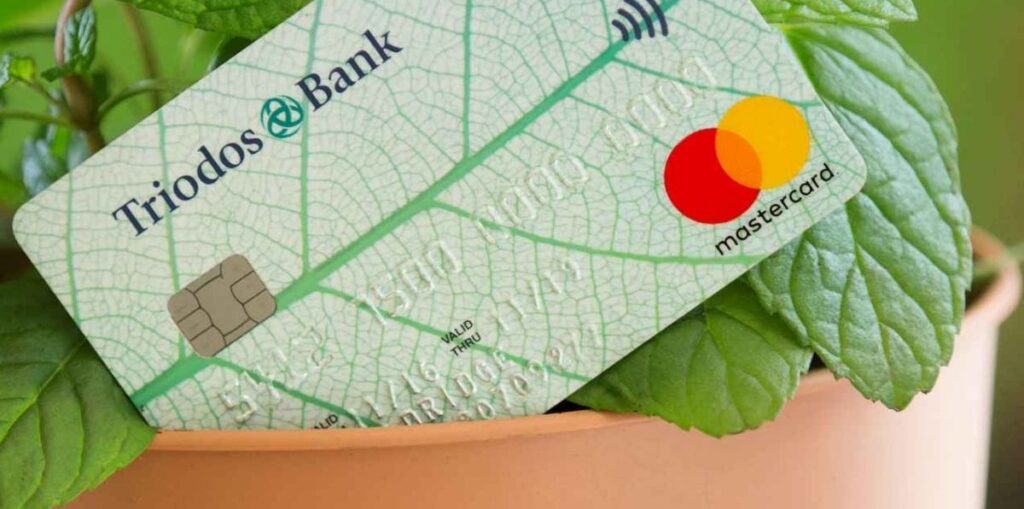
- Dedicated ethical fund managers – Companies like Triodos and WHEB have ethics at their core, not just as a side project. The advantage here is that you know they’re genuinely committed to ethical investing across everything they do, rather than just offering one token green fund. These will do the investing for you.
- App-based investment platforms – These have revolutionised investing for beginners. Many now offer sustainable and ethical fund options with low minimum investments and user-friendly interfaces. Perfect if you want to test things out without too much complexity. You do the investing. Personally, I started off with Moneybox who offer a sustainable ISA with good return rates.
- Direct investment opportunities – You can also invest directly in specific ethical projects or companies through crowdfunding platforms and specialised ethical investment sites.
Each approach has its pros and cons. What works best depends on how hands-on you want to be, how much you’re looking to invest and your level of experience.
The Best (and Worst) Ethical Investment Fund Managers
Here are some of the best ethical fund managers who will do the investing on your behalf.
Triodos – If you’re serious about ethical investing, Triodos should be at the top of your list. I’ve mentioned them before when writing about ethical banking, and they’re just as impressive on the investment side.
What I love about Triodos is that ethics is their entire reason for existing. Every single one of their funds meets strong ethical standards, so you can’t go wrong with any Triodos investment. They’re foundation-owned too, which means profit isn’t their main driver.
EdenTree – Another excellent choice where all their funds are genuinely ethical. EdenTree doesn’t just talk the talk – they have proper exclusion policies and are completely transparent about what they invest in. If you’re looking for a fund manager that applies ethical standards across the board, not just to one token ‘green’ fund, EdenTree delivers.
Castlefield – Castlefield are an employee-owned company with headquarters in Manchester. I’ve personally met one of their partners a few times at sustainability events around Manchester. They bill themselves as ‘the thoughtful investor’. It tells you a lot. Their ‘Thoughtful’ fund range has five funds that all meet high ethical standards. Castlefield consistently performs well across all ethical measures and genuinely walks the walk.
Other good fund managers Worth considering
- WHEB
- Impax Asset Management
- Jupiter Asset Management
- Liontrust Asset Management
Fund Managers to Avoid
- AXA – Give AXA a wide berth. They’ve scored terribly on ethical assessments and are currently being boycotted for financing companies that supply weapons to Israel. Not exactly the kind of company you want handling your ethical investments.
- Vanguard – This might surprise some people because Vanguard markets itself as having good ESG options, but scratch beneath the surface and it’s a different story. They’re actually the world’s biggest investor in fossil fuels and a major investor in nuclear weapons.
Best Platforms for Ethical Investing
We’ve covered the fund managers, but what about the platforms you can take a look at yourself.
Here are some good platforms to check out.
- The Big Exchange – An Ethical Consumer Best Buy platform that allows you to invest in a range of ethical funds with a minimum investment of only £25. This makes ethical investing accessible to almost everyone.
- Direct Investment – Many of the recommended fund managers like Triodos, EdenTree, and Castlefield allow you to invest directly through their websites, though check minimum investment requirements.
- Moneybox – A good place to start for first-time investors, offering sustainable ISA options with competitive return rates. It’s worth saying, they’re not a purely sustainable platform and host all sorts of funds.
How to Spot Greenwashing in Investment Funds
With the growth of sustainable investing, some funds engage in greenwashing – making misleading claims about their environmental credentials. Here’s how to avoid them:
- Look for official labels – Choose funds with FCA sustainability labels (Focus, Impact, Improvers, Mixed Goals) rather than those just using green terminology. If there was a hierarchy to them, the Focus and Impact labels are the most sustainable.
- Check portfolio holdings – Look beyond marketing materials to see what the fund actually invests in. Many ‘sustainable’ funds still hold fossil fuel companies. I looked into this with my pension many years ago and was shocked that it was invested in the likes of BP!
- Research the fund manager – Check if the company behind the fund practices what it preaches across all its operations, not just in one green fund.
How do ethical funds perform?
It used to be a common view that ethical funds underperformed when compared to traditional funds.
The market has changed and continues to change, making this an outdated view. With governments increasing support for green companies, there’s been an increase in sustainable fund values, which have performed very well over the last decade.
Recent evidence shows that sustainable funds are now consistently outperforming traditional investments. A 2024 report by the Institute for Energy Economics and Financial Analysis found that sustainable funds generated better returns than traditional funds in 2023, with a median return of 12.6% versus 8.6% for traditional funds.
The global sustainable fund market was worth $3.2 trillion at the end of 2024 – that’s more than quadruple the size it was in 2018.
With a lot of governments around the world increasing support for green companies and introducing policies that favour sustainable businesses, ethical funds are well-positioned for continued strong performance. Companies that ignore environmental and social factors are increasingly seen as risky investments.
Investors can now be confident that ethical funds have the ability to perform just as well, if not better, than traditional funds whilst having a positive impact on the world. Win-win.
Can you invest ethical or is there a moral dilemma?
I previously, and rather naively, assumed that all investing was about big banks, people in suits, wads of cash and swanky offices in the heart of cities. Some of these cliches may or may not be true!
Considering investing to have an ethical side didn’t come into the view for me. What I have since learned is that investing and ethical actions are highly compatible.
The normal aim of investors and companies is to generate a profit. Although this is sometimes achieved through unethical means, it doesn’t mean that all profit-making investors and companies are unethical. In fact, some prioritise non-financial returns just as much as financial.
If an everyday saver, such as you or me, want to make an investment that is aligned with our moral values, we shouldn’t feel guilty about it. Especially not if we are making an impact investment to support companies that are looking to drive positive change.
More ethical investment is necessary if we are to change the course of climate breakdown and society development across the globe. If anything, investing ethically should be encouraged more.

There you have it, ethical investing explained and hopefully made more understandable for you.
For first time investors and young investors, the prospect of ethical investing can be a little daunting. However, ethical investing is now so much more accessible than it was even just a decade ago.
Ethical investing has evolved over time from just avoiding the unethical companies to actively seeking out the businesses with big, positive visions for the environment and society.
For the eco-conscious person looking to invest, perhaps for the first time, impact investing may be the truest and most ethical form of investing for you to get involved with.
Over time, ethical investing will leave both your finances and the world in a more sustainable place.
Common Questions
If you liked that, you might be interested in these articles on green money…