Greaseproof paper is a staple in most kitchens but did you know it’s not exactly the best thing for the environment.
This is because most greaseproof paper tends to be bleached and treated with chemicals. The good news is that you can now buy eco friendly compostable greaseproof paper which is much better for the environment.
The negatives of traditional greaseproof paper
You may know greaseproof paper as baking paper or parchment paper.
It’s a sheet of bleached or unbleached paper, often with a layer of silicone on top (we’ll talk about how it’s made just below). The key characteristic of greaseproof paper is that it is non-porous to oil and grease – hence the name greaseproof!
The silicone coating is a stick and oil resistant covering which lends its use in baking, cooking and even in food packaging. It makes baking cookies, making cakes and storing food easy and mess free!
How baking paper is made
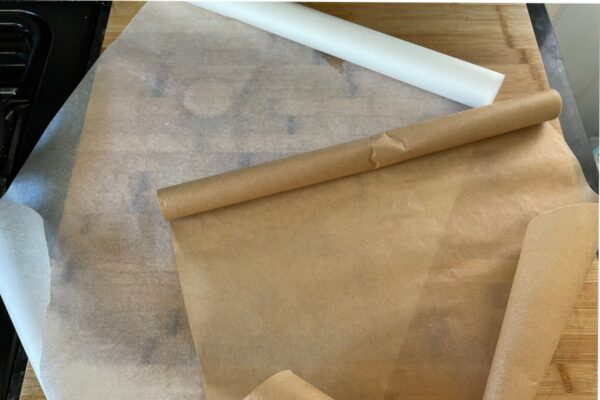
Greaseproof paper is usually produced through refining regular paper to make a special type of paper with low porosity.
This simply means that the paper will not absorb water or other liquids, keeping it water-resistant. It’s also what gives greaseproof paper its characteristic glazed look.
Although greaseproof paper is usually made from regular paper, it can also be made using FSC paper and recycled pulp, as well as sugarcane bagasse which you can read more about here.
The process of making greaseproof paper involves passing the paper through rollers, pressing it into a material called glassine. The glassine is then treated with other materials, such as starch, which fill the holes and pores in the paper.
It can also be treated with other chemicals such as silicone, which allow it to be repellent and stick-resistant. Silicone is made from processed sand but can also be treated with other chemicals – some people refer to it as a type of plastic, whilst others consider it as part of the rubber family.
During the manufacturing process, baking paper can be bleached with chemicals such as chlorine or left unbleached. Unbleached greaseproof may show a logo on the packaging, such as TCF, which stands for Totally Chlorine Free.
Can baking paper be recycled?
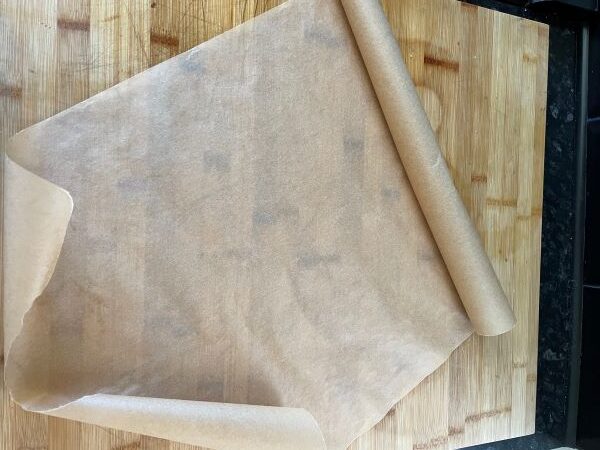
Simply put, baking paper and greaseproof paper cannot be recycled through your household collection.
The reasons which make traditional greaseproof paper so useful in the kitchen are the very same reasons it cannot be recycled.
Traditional greaseproof paper isn’t biodegradable or compostable either.

Eco alternatives to greaseproof paper
Depending on what you’re needing greaseproof paper for, there are many alternatives which are either reusable, recyclable or compostable. These alternatives are a more sustainable kitchen option and much better for our environment.
These good greaseproof paper alternatives include:
- Reusable silicone baking mats – Silpat uses reusable silicone reinforced with fibreglass mesh. They’re durable, non stick and oven safe.
- Glass baking trays and dishes – long-lasting and multi-purpose.
- Reusable wax paper – fabric or paper covered in beeswax, primarily used for for food storage and packing. You can also get beeswax wraps.
- Reusable baking foil – tear resistant and heat resistant foil for multiple different uses.
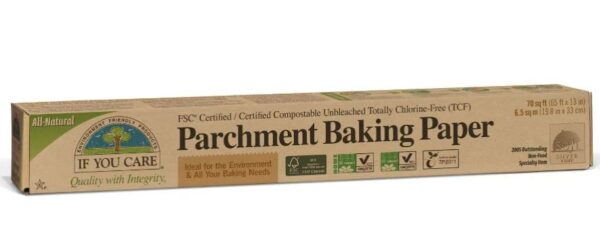
- Compostable greaseproof sheets – made from FSC-certified paper, such as Green Man and If You Care products.
- Basic greased baking sheet – a metallic baking sheet covered in fat or butter.
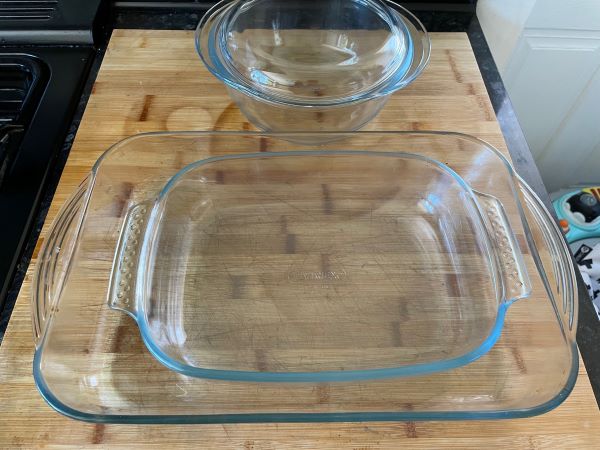
Tiny Eco verdict
Using traditional greaseproof paper is not a very sustainable choice. It’s single-use, bleached and is destined for landfill.
If we make a collective effort to use compostable greaseproof paper or reusable varieties, we’ll be fighting to reduce landfill waste, not contaminate our recycling and with the added benefit of restoring our natural soils.
As always, we should be looking to cut down our consumption and waste – so if we can use multi-use reusable products, the world will thank us. Using less is always more! And as I say, keep it simple and sustainable.
Related posts
The Green Co review – Refillable, Powerful Plant-Based Cleaning Products
Handmade Portuguese Ceramics That Bring Mediterranean Warmth Into Your Home

#EatYourPumpkin Campaign: Let’s Stop Wasting Pumpkins This Halloween

L.A. Brewery Review: Sustainable, Award-Winning Non-Alcoholic Drinks

New Microwave-Safe Stainless Steel Containers (Zero Waste Game Changer?)

Ocean Bottle Expands With New Eco Friendly Tumblers and Travel Mugs