Did you know that if every country lived like the UK, we would need roughly three Planet Earths to cover the environmental cost?
Not a good stat is it?
The modern, commercial-based world that you and me are a part of is set up for fast, excessive, wasteful living.
But there comes a point where this just can’t go on. It becomes unsustainable.
We’re seeing this right now:
- More frequent extreme weather events around the world
- Carbon emissions continuing to sky rocket
- Massive loss of biodiversity
A true alternative to the emission intense, uncontrolled ways that harm the environment is to think small. Let’s explore exactly what I mean.
What is living small?
Living small neatly combines two of my favourite concepts for sustainable living – the simple and the sustainable.
The great thing about small living is that it comes in many adaptable forms. The exact form for you may be different from me.
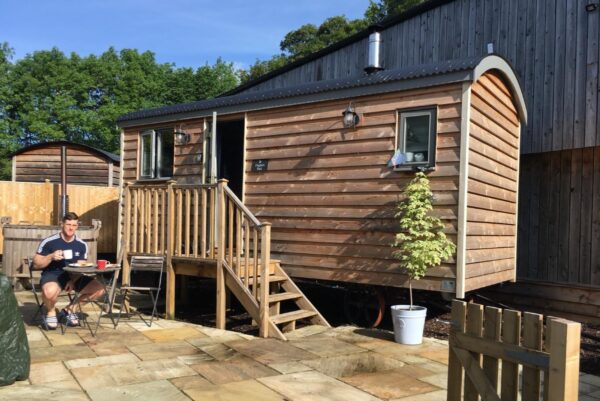
Living small may involve occupying a physically smaller home space that uses less resources, but I like to think of it more in a metaphorical sense.
For me, small living can also involve reducing your consumer habits, minimising your carbon footprint through food choice or lessening your environmental impact through an ethical bank choice.
Each aspect of metaphorically living small can have its benefits for you personally and for the environment at large. Let’s dig into the benefits.
Why we should think about positive changes
A recent study has shown that many of the key indicators of the global climate crisis are continuing to worsen. The environment we live in is suffering.
As a result, humans are suffering. As is biodiversity.
The compound largely responsible for these changes is carbon dioxide. Although carbon is essential for life, it’s the bad guy in this scenario.
Human activity has pummeled unprecedented quantities of carbon dioxide into the atmosphere. At 420ppm, CO2 levels are now at the highest levels since records began. When I was born, levels were at 355ppm.
In turn, this is causing temperatures to rise. There are a lot feedback loops at play, but ultimately the temperature trend is up and to the right.
Just this summer, the June-July-August season saw a record breaking global average temperature according to the Copernicus climate change centre.
What are the benefits of small living for the environment?
Living small may be your own way to help.
The act of living smaller across different areas of your life can result in less carbon dioxide being emitted. It can also create a less physical impact on our natural environment on land.

In a nutshell, living small means that you’ll:
- Produce less waste
- Make more informed decisions about what you buy
- Be more resourceful with materials
- Be more energy efficient
- Stay local where possible
- Physically take up less space
- Take a more caring attitude to nature
How can living small do all of this?
Quite easily in fact when you get a little more introspective about things.
Living small becomes a way of life where each element positively impacts the other. If you naturally consume less and buy local, you’ll use less energy and produce less waste almost as a by-product.
Then there’s the physical side of living small: the home where you live.

You don’t have to downsize, but you might pack out your home with less things. Keep things simple and go for the minimalist approach. I bet you won’t miss even half of the things you’d potentially clear out.
You can lessen the impact of your home by making it more energy efficient with good insulation and home improvements. You can power it with renewable energy sources, such as solar panels and heat pumps to reduce your reliance on fossil fuel companies.
It’s these large fossil-fuel loving corporations who are the real enemy in all of this, not carbon dioxide.
5 reasons to go small for you
It’s not just the environment that will benefit from positive changes. You can benefit too. Here’s how.
1. Reduce your impact and feel better
Climate anxiety is real. By reducing your impact and doing what you can (remember no one’s perfect), you’ll feel like you’re playing your part. You’ll feel like you’re doing the right thing and maybe even inspiring others.
2. Spend less money
Reduced bills, decreased fast fashion buys and less following of the faddy trends will leave you with money in your pocket.
You can save this in an ethical savings account, invest it wisely (check out this article on understanding ethical investing) or otherwise put to good use.
If you’re downsizing your property, you may even be left with no mortgage or rent to pay.
3. Live more ethically
Uncontrolled, mindless purchasing never pays off from an ethical or sustainability standpoint.
There’s not just an environmental impact to this, but a social impact too. As you know, fast fashion is often associated with terrible working conditions. The same is true for all sorts of industries.
If you can, a good rule of thumb is to buy from a B Corp company. You can check out these better online eco shops too.

4. Simplify your life
I think simplicity is a superpower.
When you dig into almost anything and get back to basics, it is simplicity that reigns.
Take Darwin’s Theory of Evolution stating that species gradually change over time via natural selection.
Or that our whole DNA, in fact the genetic material of all animals and plants, is made from just four bases. That’s four nucleotide bases that are sequenced differently.
Things become complex when a lot of simple things are stacked up. Cut the distractions and simplify.
5. Focus on the important things in life
Living small gives you more control and time to focus on the things you value:
- Relationships
- The natural world
- Having a purpose
- Being part of a community
Consumption is absolutely needed and will always be around, but it’s the way in which this is done and the prioritisation of values that’s important. Small living supports this.
Small living doesn’t necessarily mean selling your worldly possessions, upping sticks and moving to the woods. It means taking a more considered approach, reigning things back and focussing on minimising your impact through simple changes.
Taken together, these steps will reduce your environmental footprint and lead to a cleaner, more sustainable and fulfilling life.