A groundbreaking study published in the journal Science has provided compelling evidence that conservation efforts worldwide are having a measurable, positive impact on biodiversity.
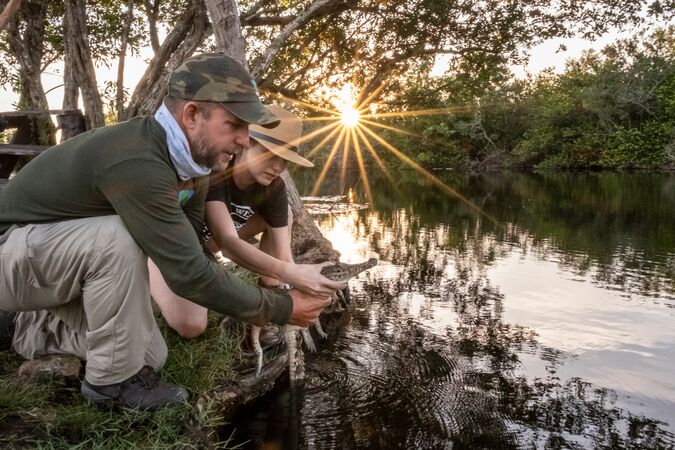
The study, a world first to comprehensively assess the effectiveness of conservation actions in helping wildlife, analysed 186 studies and 665 trials. It was led by Penny Langhammer and the team at Re:wild.
The meta-analysis revealed that approximately two-thirds of the conservation actions studied either slowed the decline of biodiversity or led to improvements. The analysis showed that the overall impact of conservation is ‘positive’ and ‘significant’, meaning the results didn’t happen by chance.
Co-author Langhammer said that headlines often paint a bleak picture of extinction, but this study “provides the strongest evidence to date that not only does conservation improve the state of biodiversity and slow its decline, but when it works, it really works.”

Most Effective Conservation Strategies
Amongst the most impactful conservation efforts identified in the study were:
- Controlling invasive species
- Reducing habitat loss
- Restoring wildlife habitats
- Establishing protected areas
- Implementing sustainable ecosystem management practices
These actions have led to significant conservation successes, including:
- Improved nesting success rates for loggerhead turtles and least terns on Florida’s Cayo Costa and North Captiva islands, where invasive and problematic native species were managed.
- A 74% reduction in deforestation rates in the Congo Basin following the establishment of a Forest Management Plan.
- Significantly lower rates of deforestation and human-caused forest fires in protected areas and Indigenous lands in the Brazilian Amazon compared to unprotected areas. Deforestation was 1.7 to 20 times higher outside the reserve perimeters.
- Successful restoration of the natural population of Chinook salmon in the wild through a captive breeding and release program in Idaho.
Magnitude of Conservation Success
Co-author Jake Bicknell, from the University of Kent’s Durrell Institute of Conservation and Ecology, said that when conservation actions are successful, they often lead to outcomes that are substantially better than doing nothing at all.
For example, measures to boost the population size of endangered species have often resulted in significant increases in their numbers.
However, the study also found that conservation measures did not always yield the desired results, with declines observed in the target species in about one in five cases. Nevertheless, even in some of these instances, the conservation actions unintentionally benefited other species.
For example, seahorse abundance was lower in protected sites because marine protected areas increase the abundance of seahorse predators, including octopus.
The Need for Increased Funding and Diverse Conservation Efforts
More than half of the world’s GDP, almost $44 trillion, is moderately or highly dependent on nature.
The authors emphasise the need for increased funding and the implementation of a variety of conservation efforts to effectively curb biodiversity decline. They estimate that a global conservation program would cost between $178 billion and $524 billion per year.
Whilst these costs may seem high, the authors argue that they are insignificant compared to the immense value that biodiversity provides to society through ecosystem services. As such, conservation actions should be viewed as investments that generate substantial, positive impacts.

Tiny Eco verdict
The study’s findings show that conservation works and measures are desperately needed across the world.
For me, the study offers hope and encouragement that positive action can have beneficial impacts on the world despite all of the negative actions going on.
As Langhammer says, “It’s clear that conservation must be prioritised and receive significant additional resources and political support globally, while we simultaneously address the systemic drivers of biodiversity loss, such as unsustainable consumption and production.”
As we face the ongoing challenges of habitat destruction, climate change and other threats to wildlife, it’s essential that we push on with efforts to support and invest in conservation initiatives to address the root causes of biodiversity loss.
I’m glad I’m still subscribed to Ecologi, who help fund habitat protection programmes.
*Header image copyright of Andrew Snyder / Re:wild
Related reads

How The Biophilic Design Trend Is Helping To Create More Nature-Inspired Homes

Biodiversity Net Gain One Year On: Is This World-Leading Scheme Taking Root?
Study Shows One Simple Tip Can Boost Butterfly Numbers by 93%

Ecologi Review: Climate Positive Impacts Through Carbon Offsetting & Tree Planting

What Is Environmental Sustainability and Why Is It Important?