In February 2024 Biodiversity Net Gain (BNG) came into force. It marked a watershed moment for both building development and nature in England.
No more were developers allowed to buy land, remove nature and replace it with man-made materials at their will. Instead, they have to plan for a 10% gain in habitats to replace what’s been lost either on their development site or elsewhere if that isn’t possible. It’s all about leaving nature better off.
It’s a brilliant idea. In fact, BNG is a world-leading initiative. It’s certainly well-needed as the UK is one of the most nature-depleted countries on Earth.
So, one year on, how are things looking and how is this innovative policy reshaping our built environment and supporting nature recovery?
Background on BNG
Biodiversity Net Gain represents a significant shift in planning policy, bringing ecology and development together in an unprecedented way.
In an amendment to the Environmental Act, mandatory biodiversity net gains states that:
- There must be a minimum 10% gain required on sites which is calculated using the Biodiversity Metric
- On-site habitat and all off-site habitat must be secured for at least 30 years
- BNG can be delivered on-site, off-site or via a new statutory biodiversity credits scheme
For the purposes of the regulations, BNG is measured using Defra’s biodiversity metric calculator, which assesses the percentage change in biodiversity value between pre and post-development habitats.
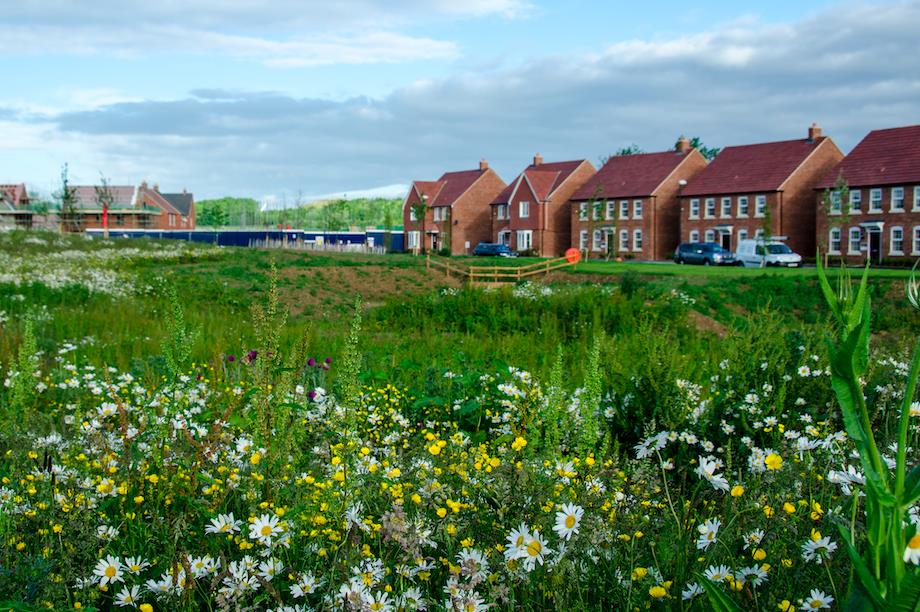
When developers cannot meet their obligation to replace habitat lost within their development site plus the required 10% gain, they can purchase habitat units through biodiversity gain sites (BGS).
Currently, more than 50 such sites provide 1,215.66 hectares of various habitat types for offsetting, including neutral grassland, lowland meadows, traditional orchards, floodplain wetland mosaic, mixed scrub and woodland. The system has shown promising early adoption, with 31 sites being used to allocate lost habitat from 74 developments, totalling 33.84 hectares.
All habitats, whether delivered on-site or off-site, must be secured for at least 30 years through conditions, planning obligations or conservation covenants.
The lay of the land one year on
It’s fair to say that with just one year of BNG, it’s too early to state whether it’s been a success. Early indicators show more promising developments, although there are still some challenges to overcome.
These things certainly take time to bed in and for organisations to get their head around. But it’s clear that BNG is, and can, bring major benefits for UK.
“We’re seeing some really positive changes. Developments are now thinking about nature right from the outset and looking to integrate that into their schemes. It’s good for wildlife, providing them with new places to live, but it’s also good for us as people as we know that living in proximity to nature improves our health and wellbeing.”
Open letter from housebuilders and environmental groups on BNG
To mark the one year BNG anniversary, a 40-strong coalition of high level organisations, including housebuilders and environmental groups, signed an open letter to the government championing the BNG initiaitive. Signatures included those from Bellway Homes, Barratt Redrow, RSPB, The Nature Conservancy, Triodos Bank, Environmental Bank and UK Green Building Council.
These organisations thought this necessary as there have been rumblings that the current government had other plans, given that BNG came into force under the previous government.
The letter states, “We, the undersigned, write to you as a coalition of innovative businesses and organisations to celebrate the first anniversary of Biodiversity Net Gain (BNG) and its role in supporting nature, promoting growth and driving a sustainable housebuilding revolution in the UK.
“Since its implementation on 12th February 2024, this first-of-its-kind policy has positioned England as a global leader in biodiversity restoration, demonstrating how nature recovery, growth, and sustainable investment can thrive together. It has brought together sectors which have historically been at odds with each other – with environmental campaigners championing BNG’s role in halting biodiversity loss and housebuilders recognising the benefits it can bring in securing local support for development.”
“As a group dedicated to promoting nature restoration through investments in novel technology and habitat restoration, we have seen first hand how innovative policies, like BNG, can help the UK channel inward investment to meet binding nature restoration obligations – at no cost to the taxpayer.
“Put simply, BNG has enabled the UK to become an international leader in shaping a greener future while at the same time boosting investment into a range of sectors and industries. UK nature businesses are winning international contracts and attracting venture investment based on this world-leading policy position.
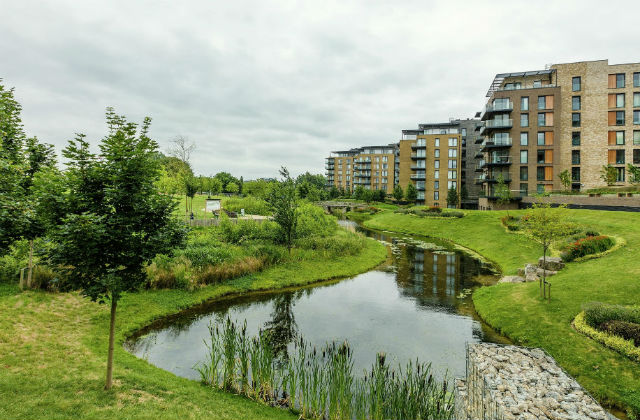
“BNG is a true success story. Over the past year, it has unlocked unprecedented investment in local habitats, while also driving green growth.”
“BNG is a true success story. Over the past year, it has unlocked unprecedented investment in local habitats, while also driving green growth. Implementing BNG has prompted businesses and organisations like ours to invest in new, highly skilled jobs across England. From AI to ecology, and from automation to analysis, we – along with many other businesses and partners – have innovated to develop ways to make the implementation of BNG as simple as possible for housebuilders and planning authorities, whilst simultaneously streamlining the planning process and creating new opportunities for nature restoration. In doing so, we have been able to create new opportunities and roles.
“This policy proves that government leadership can stimulate investment and sustainability in tandem, and should serve as an outstanding model for green investment in the future. Indeed, BNG is expected to create a £1 billion privately financed fund for nature by 2030.
“As we mark this milestone, it’s important to reflect on the strides made so far, and look forward to what can be done to continue this policy’s successful implementation, including the application of BNG to major infrastructure projects. As businesses and organisations, we are committed to championing the policy as a driver of environmental recovery, a catalyst for sustainable housebuilding, and to continuing to innovate, ensuring that BNG remains an integral pillar of the green economy.”
Momentum is building with BNG
The Environment Bank reports that sales of BNG units in January 2025 alone matched all sales from the second half of 2024, demonstrating growing demand. They’ve already registered Habitat Banks covering nearly 1,000 acres, including more than 2,500 off-site Biodiversity Units available for developers to purchase.
However, the transition hasn’t been entirely smooth. Research from the Wildlife and Countryside Link reveals that local authorities have reported just 609 hectares under the BNG scheme since its start, with an additional 93 hectares covered by onsite habitat restoration. This falls significantly short of Defra’s estimated 5,428 hectares annually.
Whilst a further 786 hectares have been proposed for offsite banks awaiting approval, the total remains below expected levels.
Measuring the impact on the Development Sector
The implementation of BNG has kickstarted positive changes across the development sector.
A recent BNG Research Report by Carter Jonas reveals encouraging progress. Their research shows that 54.7% of developments are achieving all BNG requirements on-site, delivering an average net gain of 29.4% – significantly exceeding the mandatory 10% threshold.
However, the transition hasn’t been without challenges. A National Audit Office report criticised Defra for launching BNG without having all elements in place to ensure its long-term success, particularly regarding monitoring and enforcement of on-site and off-site gains. Real-world cases highlight these complexities.

In one example, a development site saw its grassland quality improve during a protracted planning period, leading to an unexpected BNG deficit and the removal of proposed woodland planting to compensate.
In urban areas, the policy is driving innovative approaches to development. Greater Manchester has embraced BNG as part of its wider environmental strategy, incorporating high-quality green spaces into city-centre developments and addressing nature deprivation in urban areas. This approach demonstrates how BNG can work alongside other priorities such as affordable housing and urban regeneration.
The Evolving BNG Landscape
The BNG market has matured significantly over its first year. Ian Hambleton, founder of Biodiversity Units UK, says in his post, “The early days of BNG were noisy. Developers, planners, landowners and consultants were all scrambling to understand what BNG actually meant for them. But as the year progressed, we saw a major shift. Developers started to understand their obligations, and transactions began flowing.”
The emergence of habitat banks represents one of the most exciting developments in the sector. Currently, 43 habitat banks are registered with Natural England through all sorts of land-owners, including The Wildlife Trusts and Environment Bank. There are hundreds more habitat banks in development.
This transformation of the British landscape through rewilding and restoration projects signals a significant shift in land use that will leave a lasting legacy.
The Future Homes Hub has responded to implementation challenges by establishing the BNG Implementation Board. Ed Lockhart, CEO of Future Homes Hub, explains: “We are confident that by working together, we can unlock the full potential of BNG, creating a legacy of thriving biodiversity for generations to come.”

Looking Ahead with BNG
As BNG enters its second year, market stability and continued support are crucial for success. The recent open letter clearly demonstrates the wider industry’s commitment to this innovative policy. Yet the gap between current delivery and Defra’s targets suggests more work is needed to achieve the scheme’s full potential.
The habitat bank revolution continues to gather pace, with significant investment pipelines developing. Environment Bank’s £210 million pipeline of deals indicates growing market confidence, while their matching of six months’ worth of sales in January 2025 alone suggests accelerating demand. Leading housebuilders are strengthening their commitments, with Bellway’s BNG+ promise demonstrating how developers can exceed minimum requirements to deliver more ambitious environmental outcomes.
With the potential to create a £1bn privately financed fund for nature by 2030, BNG could transform how we approach housing and development in England. Rather than diminish our natural environment with future developments, we can actually drive a sustainable housebuilding revolution to go with the green homes drive.
Useful links
* All gov.uk links
Related reads
Beautiful, Full of Character and Now Verified Low Carbon – Why Reclaimed Bricks Are A Winner

All About Northstone: The NW Housebuilder Of The ‘New, New Build’
Richmond’s Elizabeth Twining Almshouses Proving Passivhaus Works For Accessible Housing

How The Biophilic Design Trend Is Helping To Create More Nature-Inspired Homes
Striking Net Zero Single-Storey Homes On The Market In Suffolk