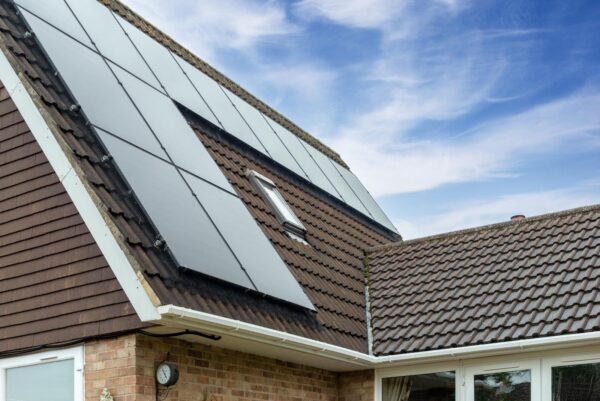
The transition to renewable energy in England continues to gain momentum, with solar panel installations up 10% since the new Labour government entered office.
The second half of 2024 saw nearly 75,000 solar panels installed across the country – an increase from 68,000 in the first six months of the year.
When considering a wider renewable energy front, installations of heat pumps, battery storage and other clean energy solutions combined has risen by 15% according to the latest research from iChoosr.
What’s Driving the Growth in Solar Installations?
The rise in solar panel installations across England is being driven by a combination of financial, policy and technological factors.
With energy bills remaining high, more households are looking for ways to reduce costs and secure long-term savings. Solar panel prices are now more affordable than ever, with prices dropping by 16% since May 2023. Improved technology means homeowners can generate more electricity from smaller roof spaces, whilst the addition of solar battery storage allows excess energy to be stored for later use. All of this can cut bills by up to 70%.
Government initiatives like the promised ‘rooftop revolution’ and the creation of Great British Energy are bringing more confidence to the sector too.

You then have other initiatives like the Solar Together group-buying schemes, which have made it easier and more cost-effective for households to make the switch. Despite this progress, many myths about solar panels still persist, preventing some homeowners from taking advantage of the benefits.
With over 1.4 million homes in the UK now fitted with solar panels, public awareness is growing. More people are realising that solar panel costs are lower than they might expect, and that installing a system can offer long-term energy independence, financial savings and environmental benefits.
Which Regions Are Leading the Way?
As part of their study, iChoosr identified England’s top Green Energy Champions for 2024, based on overall renewable energy adoption. The five leading areas are:
- Maldon, Essex
- Forest of Dean, Gloucestershire
- East Lindsey, Lincolnshire
- South Hams, Devon
- Winchester, Hampshire
These regions have seen particularly high uptake of solar panels, battery storage and heat pumps, with some of the highest concentrations of installations in the country. Increased availability of trusted solar panel installers has made the process easier for homeowners in these areas.
Is Renewable Energy Becoming More Accessible?
It’s fair to say that renewable energy is becoming more accessible. This is more straight forward to do on new build homes, but still a challenge when it comes to retrofitting the rest of the country. However, it’s more than possible.
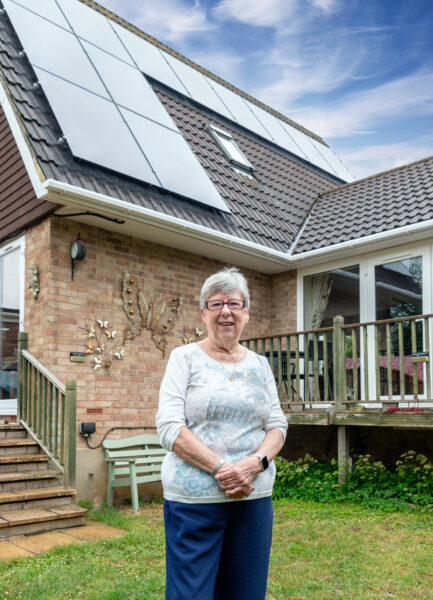
Case Study: Patricia Owen’s Solar Panel Experience
Wiltshire resident Patricia Owen was encouraged by her neighbour’s success with solar panels and decided to join the Solar Together scheme through Wiltshire Council. She installed 12 solar panels and a 4.6 kWh battery storage system, which significantly reducing her electricity bills.
> Her system generates 4,302 kWh of electricity a year.
> She has cut her monthly electricity bills from £225 to £94.21.
> Her projected annual savings exceed £569.
She’s now considering additional energy-saving measures, like loft insulation, to further reduce her energy usage.
Solar PV isn’t the only technology seeing growth. Heat pump installations hit a record 60,000 in 2024, though still far short of the government’s 600,000 target by 2028.
Homeowners interested in heat pumps should check out are guides on are heat pumps worth it and air source heat pump costs to understand the pricing, efficiency and financial incentives. You can also find heat pump installers over on the Green Business Hub.
The rise in solar panel installations and wider renewable energy adoption across England signals real progress toward a more sustainable future.
Whilst the increase in solar and heat pump uptake is promising, more investment and policy support are needed to ensure the UK meets its ambitious net-zero targets. Homeowners now have more financial incentives, easier access to trusted installers and increasing opportunities to make the switch.