When it comes to improving the energy efficiency of your home, retrofitting items like heat pumps or adding external wall insulation are often top of the list.
These upgrades can certainly improve efficiency, comfort and lower your home’s carbon footprint. But before you jump straight into a large retrofit project, there’s an important step that you shouldn’t miss out – getting a heat loss survey.
A heat loss survey can provide invaluable insights into the energy efficiency and heat retaining capabilities (or lack of) for each room of your home. This means when you do get round to a retrofit investment, these are well-placed and effective. It also means that you have the accurate information to help when speaking to companies about future installations.
What is a Heat Loss Survey?
A heat loss survey is a professional assessment that identifies where heat escapes from your home. You can think of it as a thermal map of your property. It highlights weak spots in your home’s insulation, pinpoints draughty regions and any other inefficiencies that are affecting the heat in your home.
A heat loss survey takes a thorough look at your home, unlike the slightly more thumb in the air EPC reports that give you an overall A-G rating.
Heat loss surveys provide detailed per-room heating assessment and requirements. This is especially useful if you’re thinking about installing an air source heat pump, for example, as it can help size the system appropriately.
It’s not just older properties that can benefit either – modern homes often have inefficiencies that go unnoticed until a survey brings them to light.
How do they work?
A professional heat loss survey uses advanced techniques and tools to evaluate your property. It provides detailed insights that DIY-candle-holding-methods-to-find-draughts simply can’t match.
A professional heat loss survey may use:
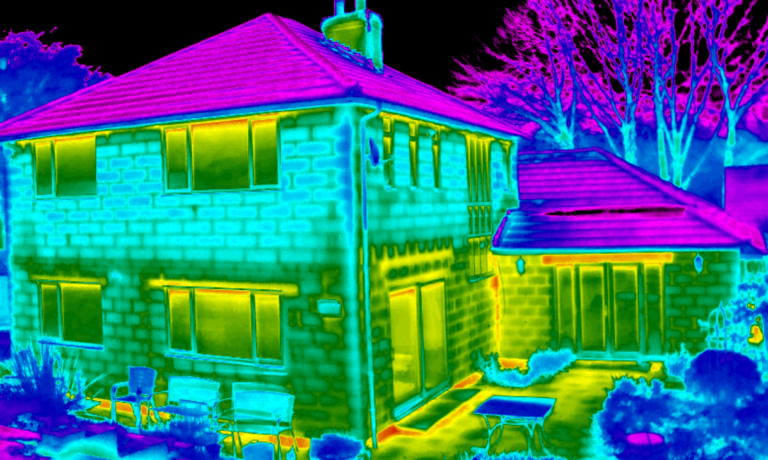
- Thermal imaging surveys: Using infrared cameras, surveyors capture thermal images of your home to identify areas where heat is escaping. These images reveal weak points in insulation, draughty windows and doors and even potential structural issues. It gives a clear visual map of heat loss.
- Airtightness testing: This involves using specialised equipment to measure air leakage in your home. A common method is the blower door test, where a powerful fan is used to pressurise or depressurise the building, highlighting draughty areas and gaps that compromise energy efficiency. This is often done when measuring for Passivhaus status.
- Detailed heat loss calculations: Surveyors calculate the rate of heat loss for each room in your home, often breaking it down by walls, floors, ceilings, windows and doors. This information is crucial for accurately sizing retrofit measures like heat pumps to make sure your insulation meets the necessary standards.
Based on the findings, you’ll then receive tailored advice on prioritising upgrades – whether it’s improving insulation, sealing gaps or upgrading your glazing.
How Much Does a Heat Survey Cost?
The cost of a heat loss survey can range from £200 up to £500, depending on the size of your property. Depending on the company, this is usually measured by number of bedrooms or total square metres.
While this might seem like an added expense, it’s a small price to pay when compared to the cost of retrofitting measures like heat pumps or external wall insulation, which will run into thousands of pounds.
By getting an independent survey (rather than one tied to an installer), you’ll receive unbiased results that put you in control of your retrofit decisions. This means you can confidently choose the right upgrades for your home without the pressure of a sales pitch.
What company should I go with?
When it comes to finding a heat loss survey provider, there are plenty of options available. These are often on the local side due to the nature of the job.
When choosing a local surveying company, make sure to check out their reviews online – you want a company with a proven track record of accurate assessments and reliable advice. It may be worth asking for recommendations from neighboughs and local community groups.
If a professional survey isn’t feasible for one reason or another, you might want to look at other options like borrowing a thermal imaging camera.
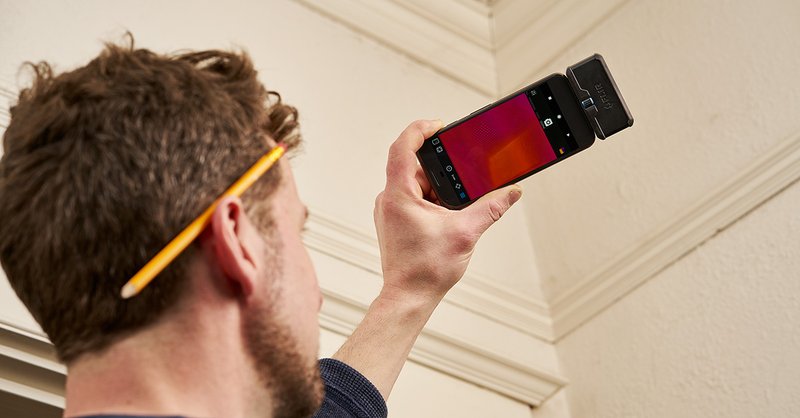
For example, Octopus Energy have a couple of hundred thermal cameras that they loan for free to their customers during the winter months. The scheme for winter 2023/24 is fully booked, but it’s worth keeping an eye on their website for opportunities next year.
It might be worth checking out local environmental groups too. Depending on where you live, some community organisations may offer thermal cameras for loan or even conduct surveys at a lower cost.
Is a Heat Loss Survey Worth It?
In short, absolutely. Here’s why:
- Precision and efficiency – Heat loss surveys provide detailed data, helping you identify exactly where your home is losing heat. This means any subsequent retrofitting measures are targeted and effective.
- Avoids over or under-sizing – For those considering a heat pump, knowing the per-room heating requirements is crucial. Oversizing can be unnecessarily expensive, whilst undersizing can lead to inefficiencies and reduced performance.
- Long-term savings – By addressing heat loss at its source, you’ll benefit from lower energy bills and greater comfort in the long run. Retrofitting based on accurate data also reduces the likelihood of costly mistakes.
For a relatively small upfront cost, a heat loss survey provides clarity and peace of mind, making it a worthwhile investment for any homeowner serious about retrofitting.
What Happens After a Heat Loss Survey?
Once your heat loss survey is complete, the next step is to use the results to plan your retrofit projects.
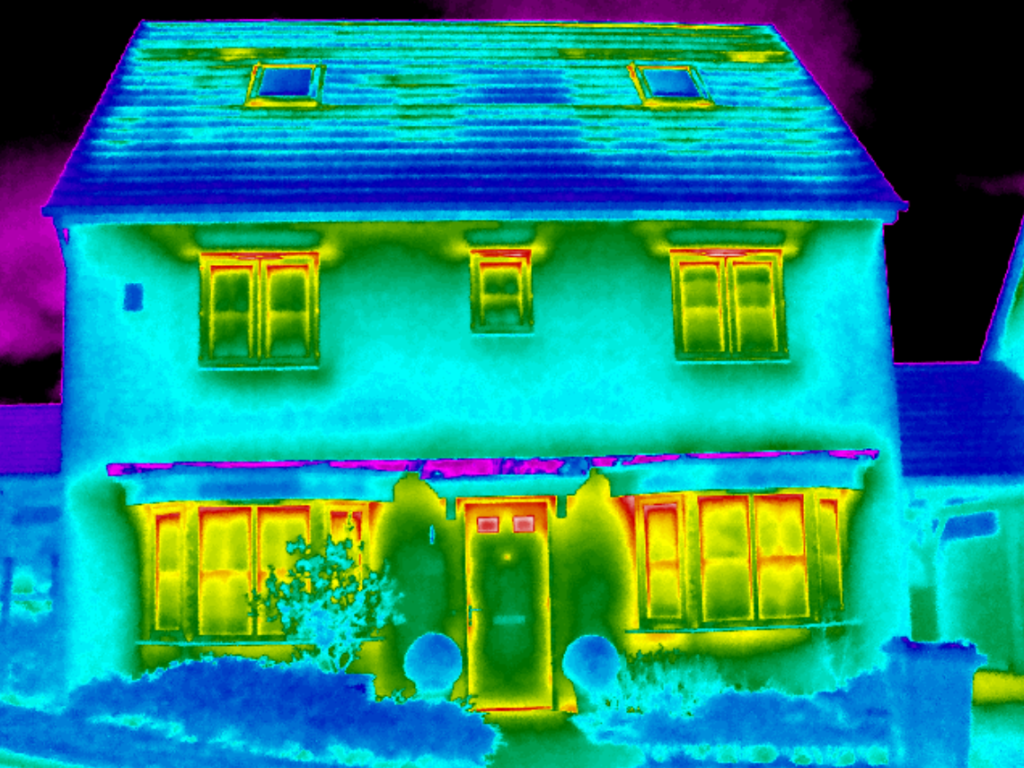
The survey will highlight areas where heat escapes the most. This may be poorly insulated walls, roofs or loft spaces. With this information, you can target insulation upgrades that will have the biggest impact on reducing heat loss and improving comfort. Additionally, any draughty areas identified can be addressed with airtightness measures, such as sealing gaps around windows and doors to help your home retain more heat.
Rather than treating your results like a closely guarded secret, it’s worth collaborating with professionals to create a retrofit plan that’s tailored to your home. Sharing your survey results with experienced installers or energy efficiency experts ensures that your projects are designed to maximise efficiency and minimise waste.