In the quiet village of Wark-on-Tyne, Northumberland, there’s been a world-first.
A former Victorian church built in 1875 has been converted into the world’s first Passivhaus-certified church conversion.
Warksburn Old Church now operates as an ultra-sustainable holiday let, offering guests a rare opportunity to experience the comfort and efficiency of an energy-positive home.
The owners behind this hugely ambitious project are Alan and Anne James.
Having already made extensive eco-upgrades to create their own highly sustainable home, a former clergy house where they’ve lived for 20 years, the couple seized the opportunity to breathe new life into the redundant church – which just so happens to be next door!
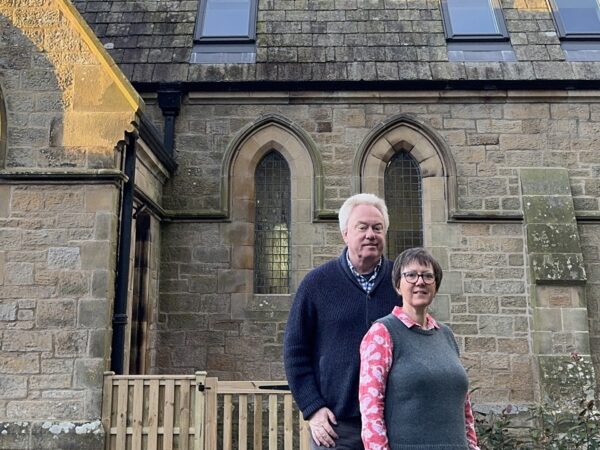
With a background in smart energy and top-level infrastructure projects, Alan brought his technical expertise and management capabilities to the challenge, whilst Anne, a ceramics artist, contributed her creative vision, interior design and finishing touches.
Their goal was not just to create a stunning and comfortable retreat, but to showcase the future of sustainable building and inspire others to follow suit – if they can convert a old, cold former church to the highest possible standards, there’s hope for all buildings.
From Redundant Church to Energy-Positive Home
When the church came onto the market, Alan and Anne saw the proverbial light extending beyond its cold, draughty structure.
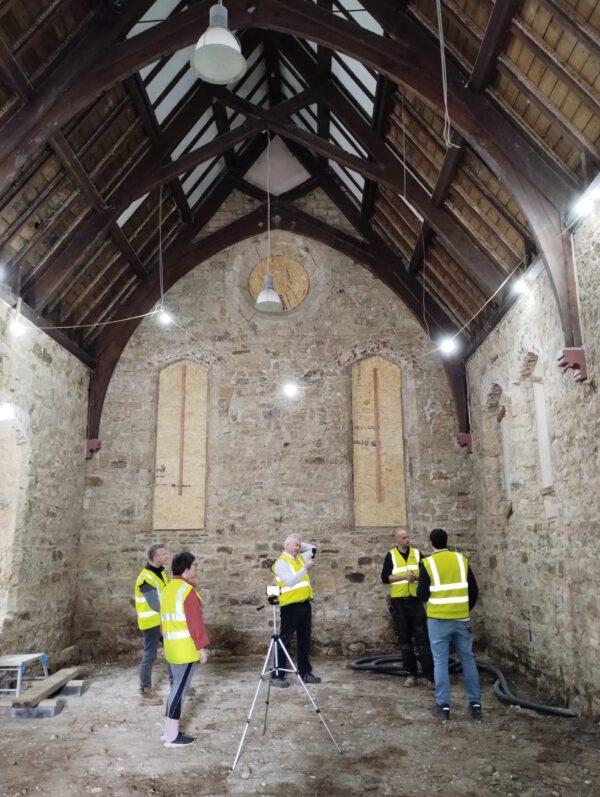
They purchased the old church for £200,000 and started their plans on a miraculously meticulous renovation. The couple invested around £1 million throughout 2023/24 to bring it up to Passivhaus EnerPHit standards – this is rigorous standard for passive house retrofits.
This project also represented a full-circle moment in the church’s history.
The building t was originally funded by Sir George Barclay Bruce, a pioneering engineer whose 1887 presidential address to the Institution of Civil Engineers contained one of the first recorded descriptions of renewable energy generation and storage. There’s even a painting of Sir George holding an architectural plan of Warksburn church!
Now, almost 140 years later, Warksburn Old Church embodies those very principles of renewable energy. You can read more about the history with Sir George here.
Achieving Passivhaus Standards
Transforming a nineteenth-century stone church into one of the UK’s most efficient buildings was no small feat.
The key challenge was maintaining the church’s original structure whilst ensuring airtightness and insulation met the stringent Passivhaus requirements.
Alongside his own knowledge, Alan had plenty of expertise on hand from energy consultants Ecospheric, the company behind the UK’s greenest retrofits, Insight Architectural Design and Passivhaus certifiers ZE Passivhaus.
The team effectively built a self-contained, highly insulated box within the church’s shell. A new timber studwork frame was constructed inside the existing walls and roof, allowing for the installation of advanced insulation layers. And advanced insulation layers there are:
- A moisture-control membrane inside the original stone walls
- 200–250mm of layered insulation, combining PIR boards and mineral wool
- An airtight membrane to seal the inner walls and ensure minimal heat loss
- Super-insulated flooring using 12 tonnes and 4 layers of Geocell, a lightweight recycled glass aggregate
The airtightness of the church was rigorously tested using a blower door test, which measures air leakage. The final result of just 0.19 air changes per hour (ACH) places Warksburn Old Church among the most airtight buildings in the UK, giving it exceptional thermal performance and minimal heat loss.
To give you an idea, this is around 50 times greater than most of the standard UK housing stock.
Energy-Positive with solar and battery storage
Beyond its thermal performance, Warksburn Old Church is designed to generate more energy than it consumes.
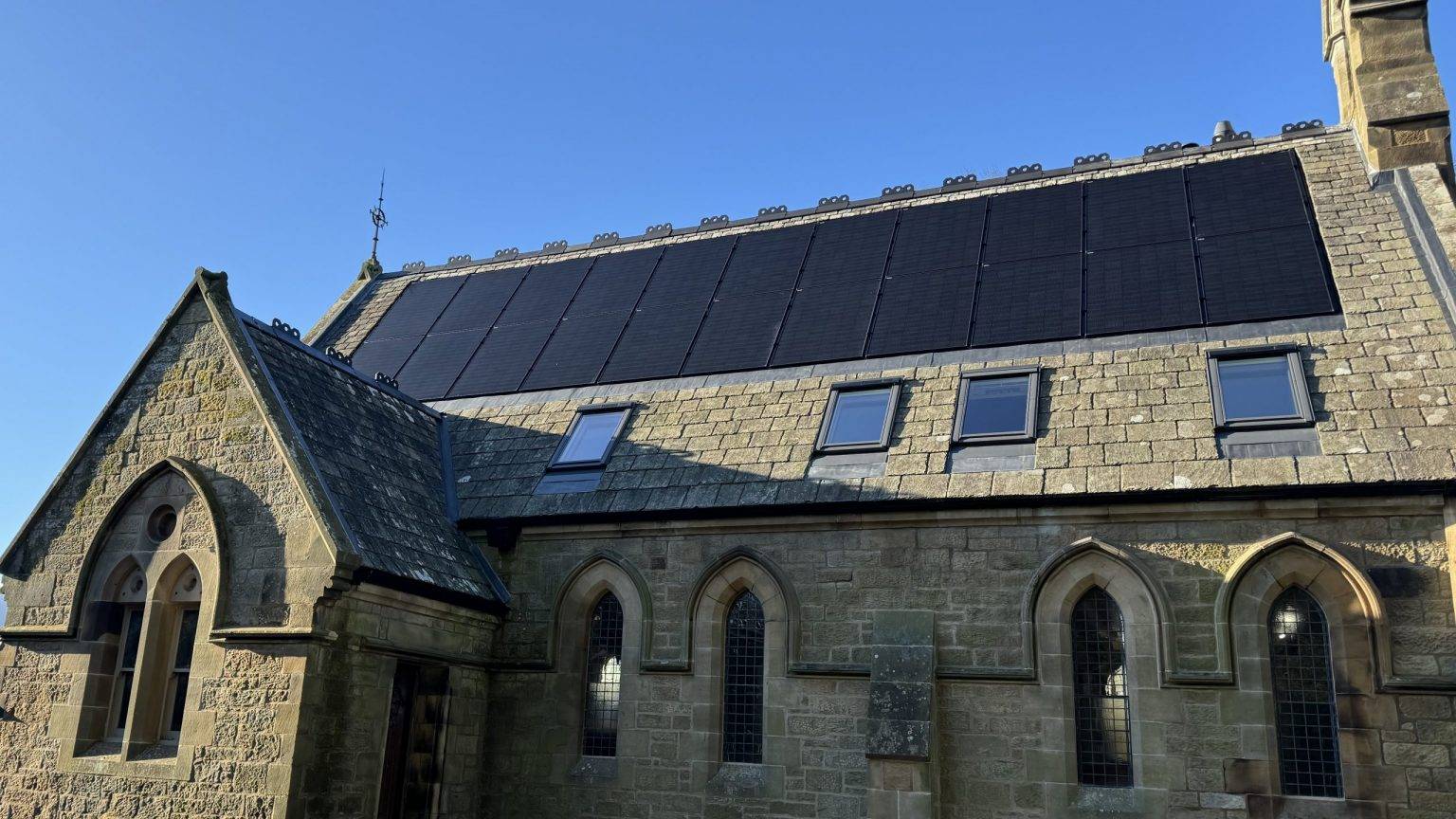
A 9kW solar array, discreetly recessed into the church’s original Westmorland slate roof, provides a steady source of renewable electricity. Any excess energy is stored in one of two Tesla Powerwall batteries to bring an element of self-sufficiency throughout the year.
During the summer months, the solar panels produce significantly more energy than required, with around 3.5MWh exported to the national grid between April and October.
Over the course of a year, Alan, who also runs the Electrify Life blog, says the building generates 7.7MWh of electricity whilst consuming just 7.5 MWh, making it an energy-positive home.
When the solar and battery can’t supply all of the electrical needs in the depths of winter, the church uses a certified zero-carbon tariff from Octopus Energy.
If you happen to bring your electric vehicle when you stay at Warksburn, you can use one of the three 7kW myenergi Zappi EV chargers to charge up for free.
Smart Energy Systems
One of the most striking aspects of the retrofit is that Warksburn Old Church does not require conventional heating. No radiators. Not even a heat pump.
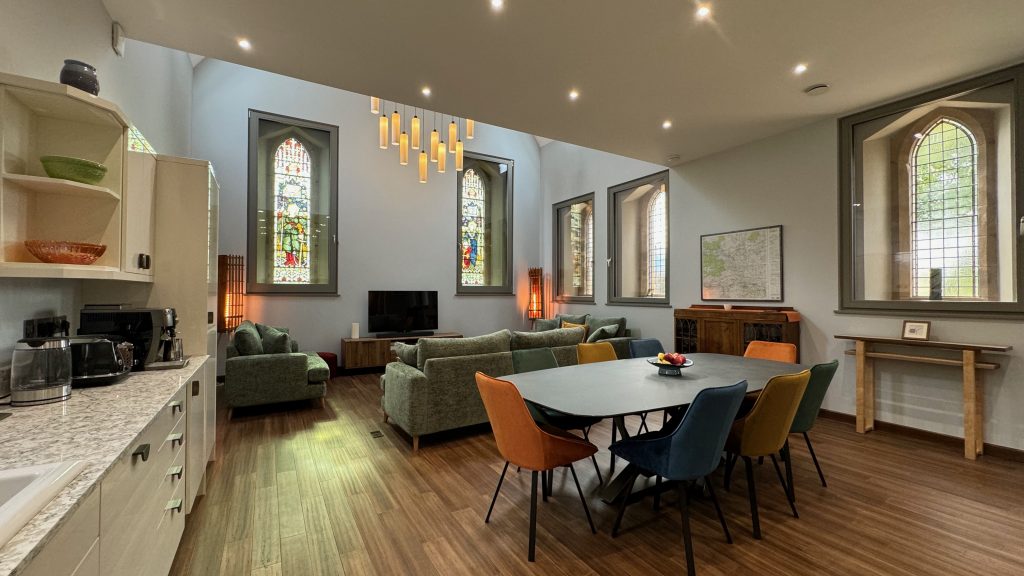
Instead, the building relies on a combination of super-insulation, airtight construction and a Mechanical Ventilation with Heat Recovery (MVHR) system.
The MVHR unit doesn’t just freshen up the internal air, but it extracts heat from stale outgoing air and transfers it to fresh incoming air. This heat exchange, plus the warmth emitted from the occupant’s bodies, is enough to maintain a comfortable indoor temperature without the need for additional heating. How good is that?
Additional energy-saving features include:
- Far infrared heating mats, carefully positioned in floors, walls and ceilings so that it isn’t blocked by furniture. Infrared is great as it heats people and surfaces rather than air.
- A Mixergy X smart hot water cylinder, which is 30% more efficient than conventional tanks.
- A Power Pipe waste water heat recovery system, wraps around waste water pipes to capture warmth from shower water, which is used to pre-heat incoming cold water.
- A myenergi eddi solar diverter, which sends surplus solar power to heat water, further reducing reliance on the grid.
Alan and Anne have, quite literally, considered everything from an energy perspective to make this conversion truly special.
An Ultra-Sustainable Holiday Retreat
Beyond its remarkable energy performance, Warksburn Old Church is designed to provide a luxurious and immersive stay for guests. As an ultra-sustainable holiday let, it allows visitors to experience Passivhaus living first-hand.
As Alan says, it offers a ‘try before you buy’ opportunity for those considering a green home of their own.
Wark also happens to be adjacent to a the UK’s largest Dark Sky Park. So, if you like a spot of inspirational stargazing, this is an ideal retreat for you – you can even stargaze whilst relaxing in the bath.
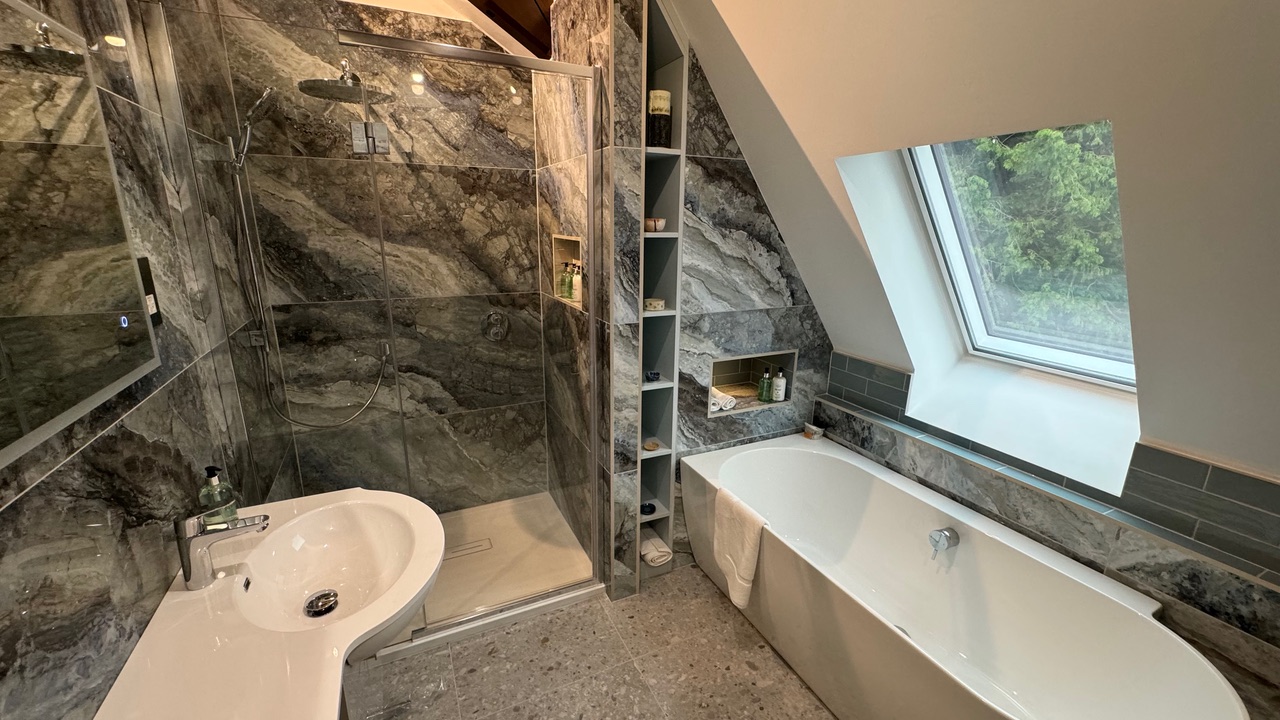
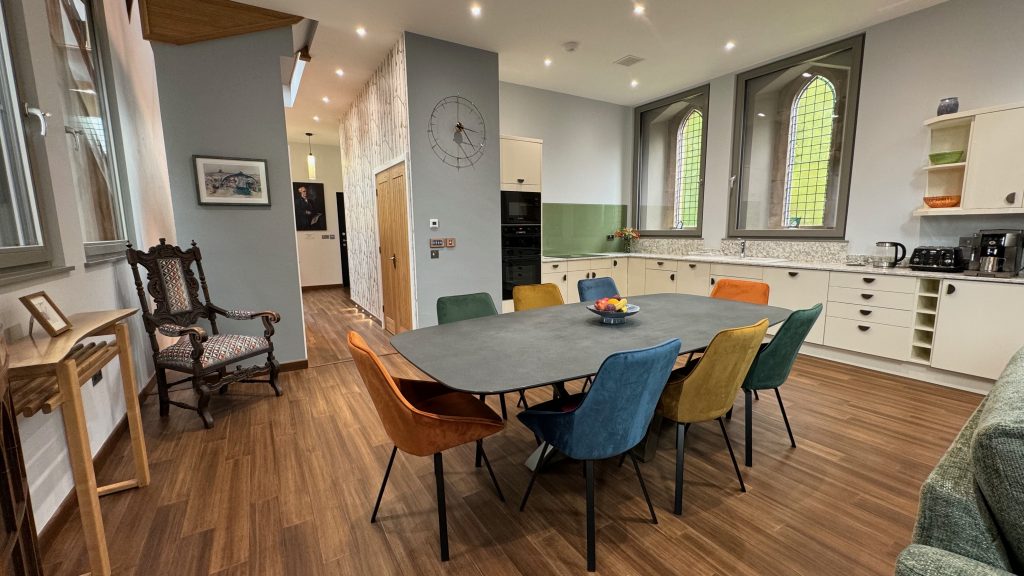
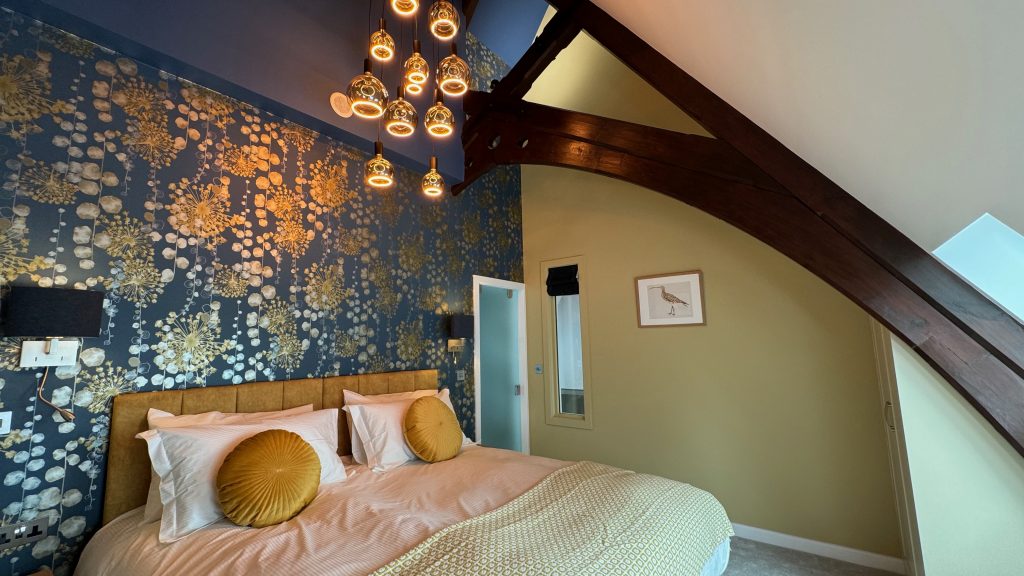
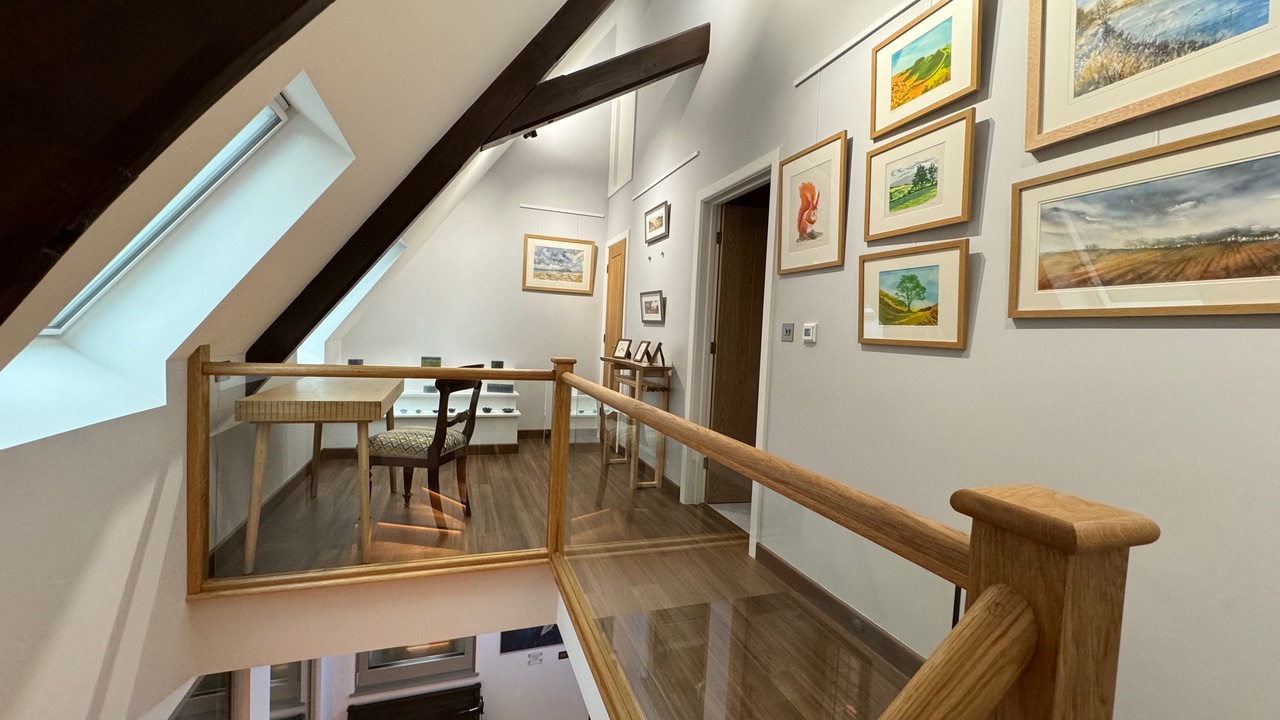
In addition to its supreme energy efficiency, the church’s interior has been thoughtfully designed using plenty of local suppliers, and of course featuring some of Anne’s fine ceramic work. Tables made from one of the trees at the church, local paintings and exceptionally made light pendants all feature.
The renovation preserved historic features, such as stained glass windows and soaring timber roof trusses, whilst incorporating modern materials like bamboo flooring and cork underlay.
Green Tourism Gold Award
In recognition of its sustainability credentials, Warksburn Old Church has received the prestigious Green Tourism Gold Award.
This mark represents the highest level of environmental performance – less than 160 self-catering holiday properties in the whole of the UK hold this certification.
The project was officially certified to Passivhaus EnerPHit Classic standards in September 2024 by ZE Passivhaus, cementing its status as a pioneering example of green renovation.
A Model for the Future
Warksburn Old Church proves that Passivhaus principles can be successfully applied to even the most challenging historic buildings. Its transformation from a cold, inefficient church into an energy-positive home demonstrates that high levels of comfort and sustainability can (and should!) go hand in hand.
For those looking to experience sustainable living in action, this extraordinary property offers a glimpse into the future of home design and a testament to what is possible when innovation meets environmental responsibility.
Head over to the Warksburn Old Church website to learn more and book your stay.
Related reads
Beautiful, Full of Character and Now Verified Low Carbon – Why Reclaimed Bricks Are A Winner

Handmade Portuguese Ceramics That Bring Mediterranean Warmth Into Your Home

How The Biophilic Design Trend Is Helping To Create More Nature-Inspired Homes
Striking Net Zero Single-Storey Homes On The Market In Suffolk

Take A Look At This Amazing A-Rated Self-Build Eco Home For Sale In East Sussex