Top Takeaways
>> The Zed House is the UK’s first zero carbon concept home by a major housebuilder, aiming to create a pathway for zero carbon homes by 2030.
>> It achieves a 125% reduction in carbon emissions through innovative technology and sustainable design, exceeding Future Homes Standard.
>> The project combines cutting-edge construction methods with smart home features and biodiversity-friendly landscaping.
Imagine a home that doesn’t just meet sustainable living standards, but far surpasses them?
Think much lower running costs, significantly reduced monthly bills and a much lower impact on the environment.
That’s exactly what the Zed House was built for. It’s a groundbreaking zero carbon concept built by Barratt Developments on the University of Salford’s main campus. This unique project is setting new standards for green homes in the UK.
What is the Zed House trying to achieve?
The whole idea behind the Zed House is to reinvent the way we think about sustainable living at home. It’s the first home built in the UK by a major housebuilder that goes substantially beyond the Future Homes Standard, reducing carbon emissions by 125%.
But it’s not just about impressive numbers. The Zed House, sometimes written as the Z House, is a living laboratory too. It designed to test and monitor the most advanced sustainable housing technologies. From innovative heating systems to smart appliances and eco-friendly building materials, every aspect of this home has been carefully considered to minimize its environmental impact.
Unlike some concepts, the Zed House will have people living in it to test out what it’s really like for potential homeowners and occupants.
The goal is to pave the way for zero carbon homes across the UK by 2030. A bold ambition.

How does the Zed House plan to achieve zero carbon living?
The Zed House is packed full of sustainable innovation, cutting-edge technology, smart design and green concepts. All the technology innovations and features are measured by 95 sensors and 1km of cabling throughout the house.
We can split the Zed House into three areas:
- In-house tech
- Building fabric and construction
- Garden and outside areas
You can take a virtual tour of the Zed house here.
In-house Technology
- Innovative heating systems
- Mitsubishi Ecodan air source heat pump, which extracts heat from the outside air to warm the home efficiently
- Infrared ceiling panels to provide direct, comfortable heat.
- Heated skirting board system called ThermaSkirt from Discrete Heat – these skirting boards deliver 10% more heat than traditional radiators while saving valuable wall space
- Larger, more energy efficient radiators reduce energy output by around 30%

- Renewable energy generation & storage
- Equipped with an array of 25 PV solar panels that generate over 4,200kWh of energy per year – learn more on how much solar panels costs
- Any excess energy is stored in two battery systems for use when the sun isn’t shining
- Set up with Octopus Energy’s smart agile tariff, which adjusts energy usage based on the cheapest times to use power
- Air quality
- Plaster on the walls is able to eliminate pollutants, resulting in cleaner, fresher air
- Paint neutralises air pollution, is anti-mould and anti-bacterial – it has a 60-70% lower carbon footprint than standard paints as it’s made via renewable energy and contains 40% recycled materials
- Mechanical ventilation

- Smart energy saving appliances
- Smart sockets, switches and home controls that can be adjusted from your phone
- Fridge that keeps food fresh for longer
- Air-powered showers from Kelda Showers reduce water use by around half.
- Waste water heat recovery system from Recoup captures the heat from your shower water and uses it to reduce the energy needed for your next shower by about 55%
- Water efficient 4-in-1 tap reduces water and energy use
- Electric vehicle charger
- Sustainable materials
- Kitchen worktops are made from 100% recycled chipboard
- Doors are 100% recycled chipboard
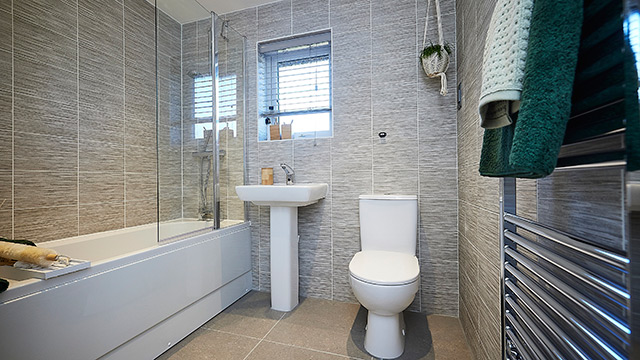
- Bathroom tiles are made from recycled, thinner materials that are locally sourced
Building Fabric and Construction
The Zed House isn’t just smart on the inside – its very structure is designed for sustainability, longevity and energy efficiency.
- Modern Methods of Construction (MMC) – The house was built using advanced MMC techniques that not only reduced build time by half but also improved precision and reduced waste. This includes the use of closed panel timber frames and offsite panelised masonry ground floor wall panels, which arrive on-site ready to install. This saves around 10 tonnes of carbon per home. The staircase, flooring and door kits are pre-assembled.

- Insulation – The Zed House takes insulation seriously. From the insulated pre-cast concrete floors to the maximized insulation in walls and roof space, every part of the house’s envelope is designed to keep heat in and energy bills down.
- Windows – Enhanced double glazed windows in recycled PVC-U frames. The windows and door frames can be recycled up to 10 times. Even the tiles contain up to 40% recycled content.
Garden and Outside Areas
- Wildlife friendly garden – Has achieved a gold rating from the RSPB thanks to a selected mix of native and non-invasive species sourced from a local supplier. The garden also features hedgehog highways, swift bricks and bat and bee boxes.
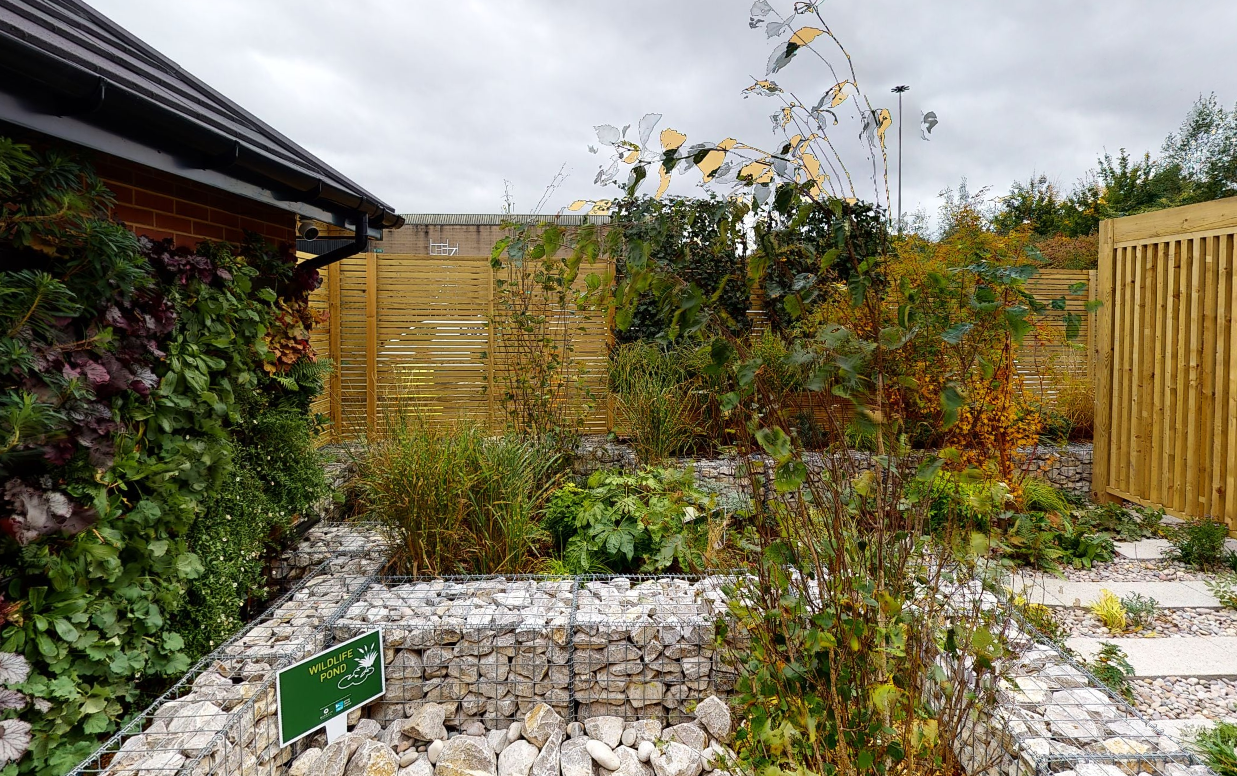
- Living green walls – To maximise biodiversity in a small space, the design incorporates living green walls and screens supplied by Hedera Screens. These vertical gardens not only provide additional habitats but also help to insulate the house and improve air quality.
- Smart water design – The driveway is permeable, allowing rainwater to soak into the ground rather than running off into storm drains. A smart rainwater recycling system captures and reuses rainwater, reducing the demand on mains water supply.
Partners involved in the Zed House?
The Zed House is the idea of Barratt Developments, the UK’s largest housebuilder, that’s been built in partnership with the University of Salford, who are leading institute when it comes to energy efficient buildings. Take a look at the Energy House 2.0 project for more info on green homes.
But it’s far from just these two organisations. This ambitious project has brought together over 40 leading organisations from across the housebuilding, sustainability and technology sectors. There’s further reading in this Zed House brochure.
The full list of partners in the project:
- AIMCH
- Aqualisa
- ARC Building
- Bison
- British Gypsum
- BU UK
- Clarkson Evans
- Cundall
- Darren Evans
- Discrete Heat
- Donaldson Timber Engineering
- Eco2Solar
- Electrolux
- EnviroVent
- Eurocell
- Forterra
- Geberit
- Glidevale Protect
- Goldby & Luck
- Green Lighting (GL)
- GTC
- Hedera Screens Ltd
- Ian Firth
- Infrared Replacing Gas
- James Hardie
- Johnson Tiles
- Kelda Showers
- Legrand
- Light Source Labs
- Marshalls
- Metrotile
- Mitsubishi Electric
- Nissan
- Octopus Energy
- Oregon Timber
- Polypipe
- Recoup WWHRS
- RSPB
- SDS Limited
- Sky
- Staircraft
- Stormking
- Symphony
- Tenmat
- Thermal Economics
- University of Salford
- Xtratherm
Can this home be one for the future?
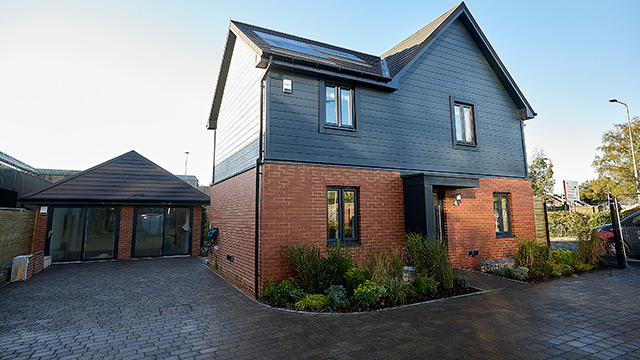
As someone passionate about sustainable living and green homes, I’m genuinely excited by the Zed House. It’s design and construction is truly impressive.
The Zed House is packed with smart, energy-efficient and biodiversity-friendly features that could make a real difference in reducing not just our own carbon footprint’s, but the country’s as a whole.
I’d love to see this concept rolled out for all new homes. If you already own a home, it gives you plenty of ideas for retrofitting green features and energy saving ideas.
However, two big questions remain: How livable is this home on a day-to-day basis and what are the cost implications of all this technology? The real test will be seeing how comfortable and practical the Zed House is for long-term living, and whether these innovations can be scaled up affordably for mass production.
We’re eagerly awaiting results and feedback from Barratt and the University of Salford. This real-world testing is crucial to understanding not just the environmental impact, but also the human experience of zero carbon living. If it doesn’t work for humans living in it, then it won’t work at all.
*All images sourced from Barratt Developments
Read more about green home design…
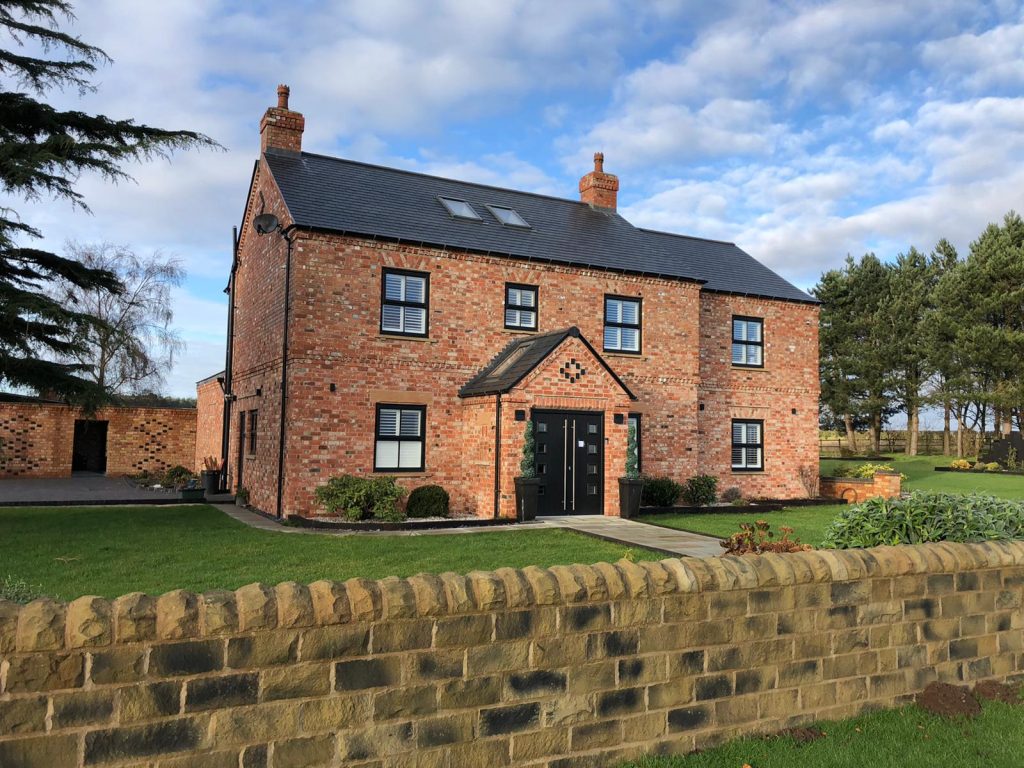
Beautiful, Full of Character and Now Verified Low Carbon – Why Reclaimed Bricks Are A Winner

All About Northstone: The NW Housebuilder Of The ‘New, New Build’
Richmond’s Elizabeth Twining Almshouses Proving Passivhaus Works For Accessible Housing

Coppers Meadow: One Of The Most Eco-Friendly New Build Developments In The UK Now Ready
From Victorian Church To World-First Passivhaus Conversion – A Look At Warksburn Old Church